Haiti’s approval of a cooperation agreement with El Salvador gives official political backing to Salvadoran soldiers already operating in the country. It does not answer the central questions about their mandate, duration or the rules governing their operations.
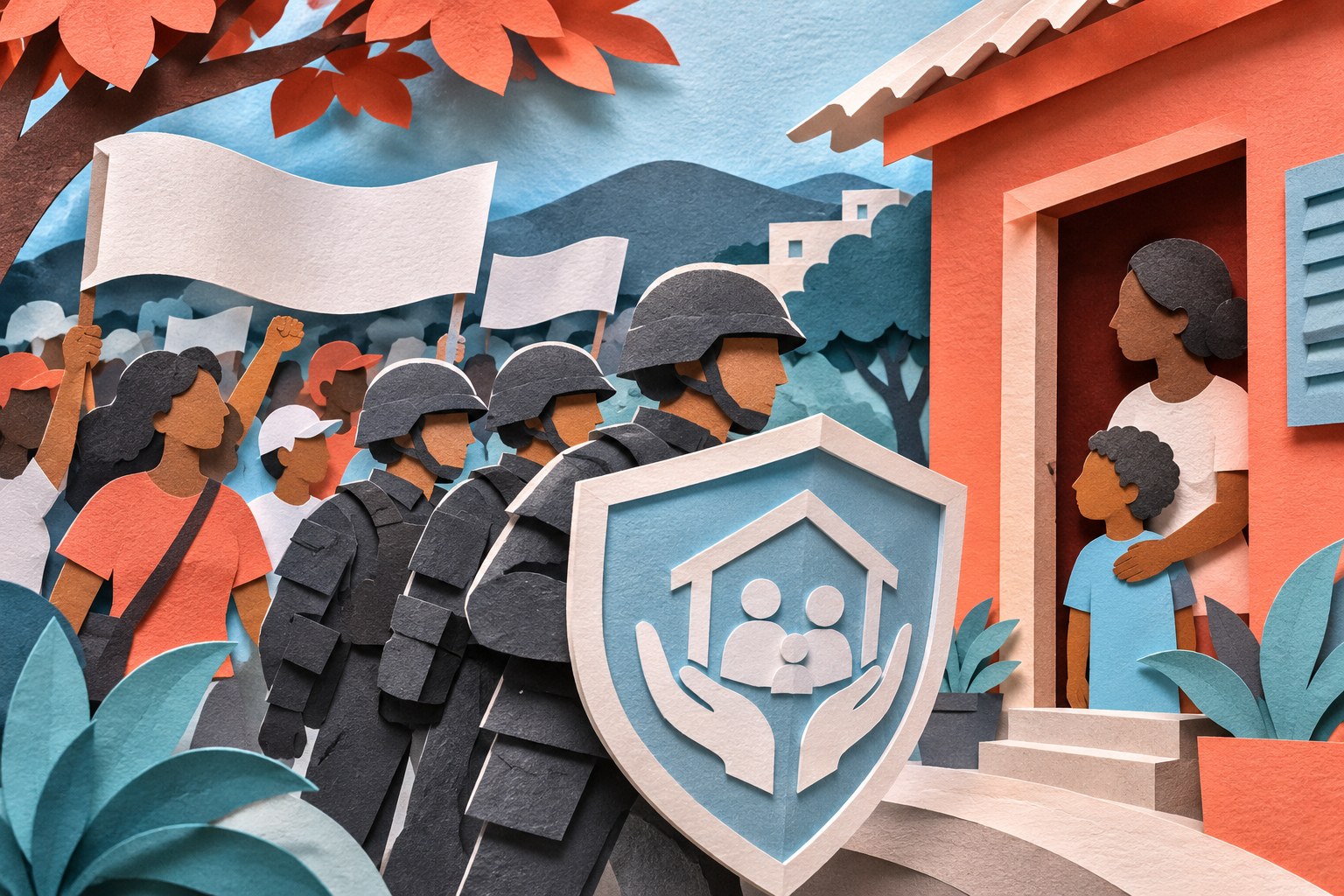
Thousands of people marched in Port-au-Prince on 17 November to support the soldiers sent by Salvadoran President Nayib Bukele to fight gangs, according to an AFP correspondent cited by France 24. Later that evening, Haiti’s government said its Council of Ministers had approved a cooperation agreement with El Salvador, describing it as a step toward stronger bilateral ties in response to Haiti’s security crisis.
The sequence matters. France 24 reports that Bukele sent more than 2,000 soldiers to Haiti in late October. The deployment is no longer only a foreign initiative welcomed by Haitian authorities; it now has visible approval from the Haitian government. In a capital largely controlled by armed gangs, that backing can strengthen the political room available to authorities and forces confronting them.
Yet political approval is not a substitute for a public operational framework. France 24 reports that the deployment was launched without UN approval. El Salvador says its troops went to find four members of the UN-backed Gang Suppression Force who went missing near the capital and will leave after they are rescued. The same report says Salvadoran operations have gone beyond that stated mission, while the terms of the newly approved agreement have not been published in the supplied material.
That is the key issue. The need for protection is acute: the UN human rights office, cited by France 24, recorded 4,595 deaths and 2,050 injuries from armed violence during the first ten months of 2026. But a broader foreign military role needs accessible rules on command, operational scope, duration and accountability. The UN human rights office also called on all security forces in Haiti to prioritize civilian protection and use lethal force only as a last resort.
The march cannot establish the view of Haiti as a whole. Together with the government’s approval, it shows visible political support for the Salvadoran presence. What matters next is whether the commitments governing that support are made public.
Sources
- France 24 Tous titres · Source date: 2026-11-18
Independent editorial content. WUA is not affiliated with any political party. 2026-11-18