The Spanish government is expected to approve aid for people affected by the Urda rail crash by royal decree on Tuesday, while Transport Minister Óscar Puente is due to report to the cabinet and later to Congress. That support is necessary, but it cannot stand in for the accountability still required: compensating victims does not explain why normal running could be resumed when a critical safety protection had failed.
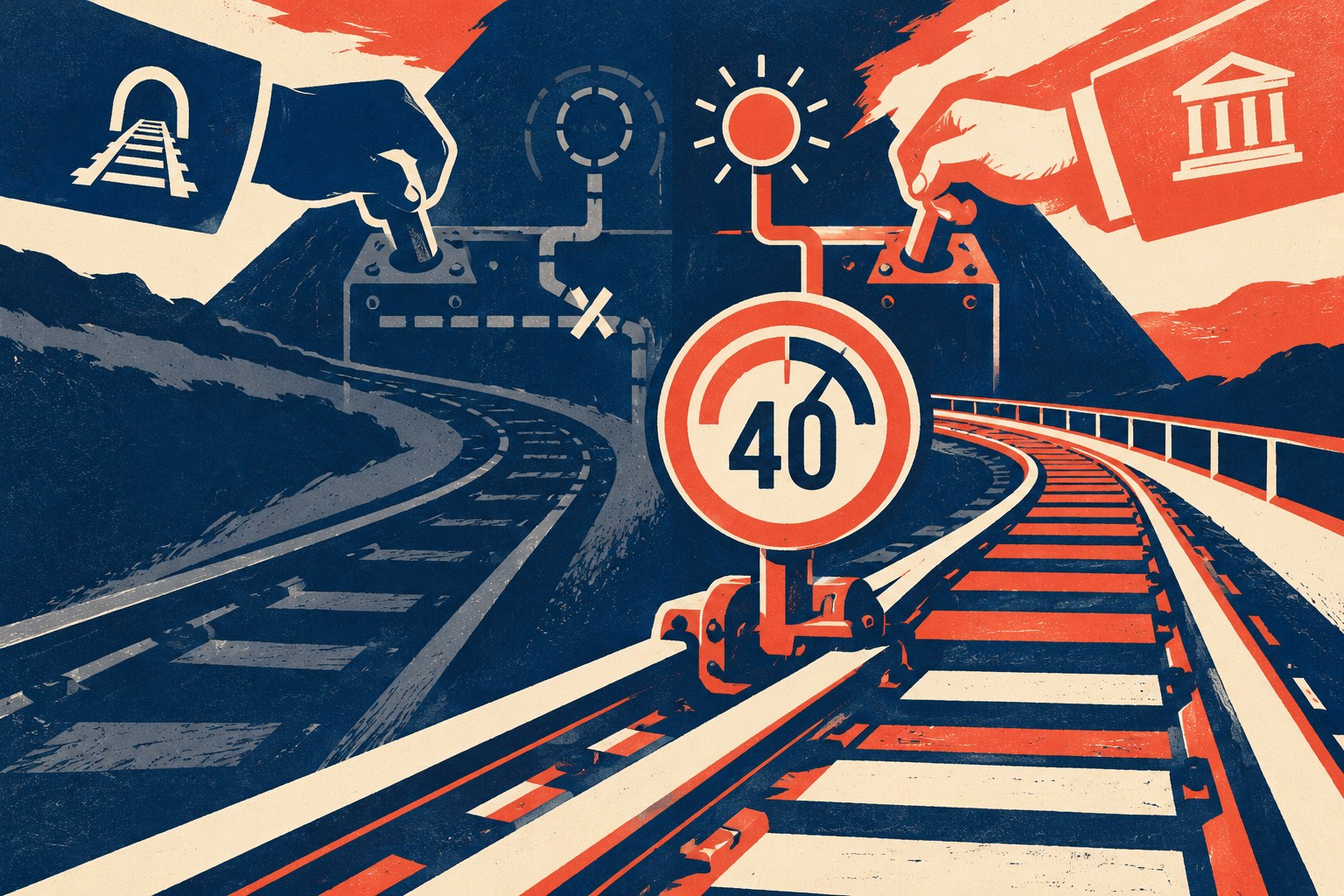
According to elDiario.es, Renfe is drafting instructions under which drivers would resume at sight, at no more than 40 km/h, after a partial blockage of the LZB system. They would first confirm with Adif’s control centre that the relevant block section was empty. The document is not final, and Renfe has not published its text. Furthermore, traffic regulation falls to Adif, so an internal Renfe recommendation would not by itself replace a binding operating rule.
That proposed precaution looks sensible. It also sharpens the unanswered question. If sharply reducing speed and verifying that no other train occupies the section is now the prudent response to an LZB failure, Puente’s report should explain what protocol applied before the Urda crash and how it was used. The available reporting does not establish that an LZB failure or the previous rules caused the crash; the technical investigation remains open. But the planned measure makes it reasonable to demand a checkable account of the level of risk previously accepted.
The human urgency is beyond dispute. Four days after the tragedy, 56 of the 69 people who died had been identified, according to elDiario.es’s live coverage. The planned aid may address immediate needs, but it remains an announcement until the cabinet approves the decree and its terms are published.
The strongest case for the government and Renfe is that they should not prejudge a technical inquiry. That is right. Yet waiting for its conclusions does not prevent them from publishing the prior protocol, the precise status of the new instruction, and who can make it mandatory. Those are the concrete issues to watch after Tuesday’s meeting.
Sources
- elDiario.es · Source date: 2026-11-01
- elDiario.es · Source date: 2026-11-01
- elDiario.es · Source date: 2026-11-01
- El Mundo · Source date: 2026-11-01
Independent editorial content. WUA is not affiliated with any political party. 2026-11-01