The UK government has opened a consultation on national standards for shared e-bikes, proposing a shift from locally uneven arrangements towards minimum rules for riders, operators and councils. Its most important feature is not the prospect of on-the-spot fines alone. It is the attempt to make responsibility for parking, fleet control and access to pavements more enforceable across the country.
The proposals could bring clear consequences, including fines, for dangerous or drunk riding, riding on pavements, underage use and jumping red lights, the BBC reports. But these are proposals under consultation, not rules now in force. The available material does not give fine amounts, identify who would issue them, explain any appeal process, or set out legislation and a start date.
For operators, the government is considering national expectations including a parking plan and controls over fleet size and operating area. Local leaders could be able to license shared-bike schemes, rather than relying on the current patchwork of company-council agreements. The consultation also considers insurance requirements so someone hit by a user of a shared bike could seek compensation, and possible data-sharing requirements intended to support enforcement and journey planning.
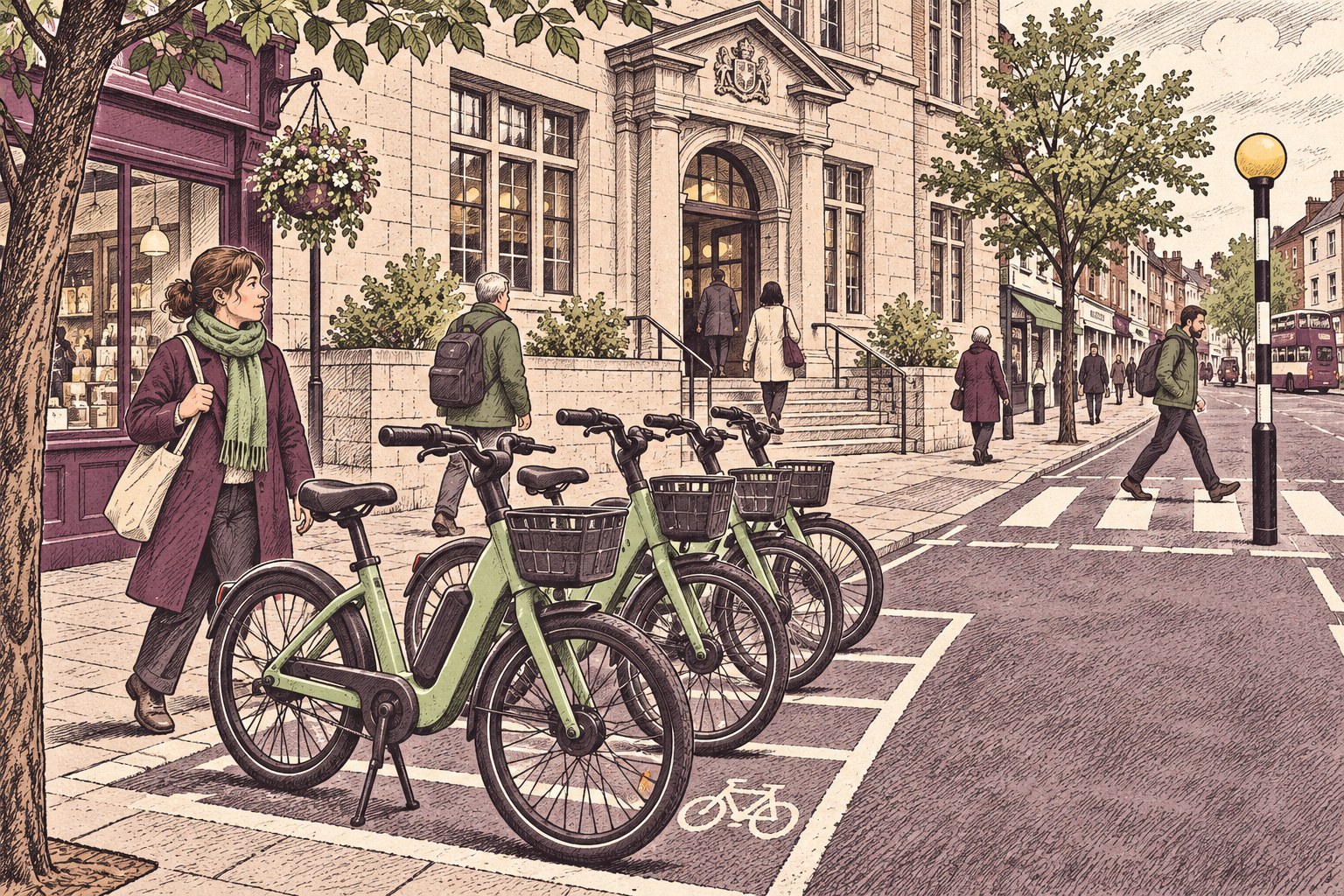
That structure matters because a rider fine cannot by itself solve an e-bike left across a pavement. Parking bays, fleet management and a local authority able to set and enforce conditions address the operator side of the problem. The Greater London Authority says dockless e-bikes accounted for 37 million trips last year, up a third on the previous year, underlining why a voluntary, inconsistent model is under pressure.
There is a reasonable counterargument: national consistency could give operators, riders and the public clearer expectations. Lime, Voi and Bolt welcomed the idea, according to the BBC. Yet consistency will only be meaningful if the final scheme specifies powers, funding and accountability rather than simply announcing tougher standards.
The next issue to watch is the consultation’s detailed design: who enforces any fines, what licensing conditions councils may impose, and whether national standards will be backed by a defined legal route and timetable.
Sources
- BBC UK · Source date: 2026-11-05
- The Guardian · UK · Source date: 2026-11-05
Independent editorial content. WUA is not affiliated with any political party. 2026-11-05