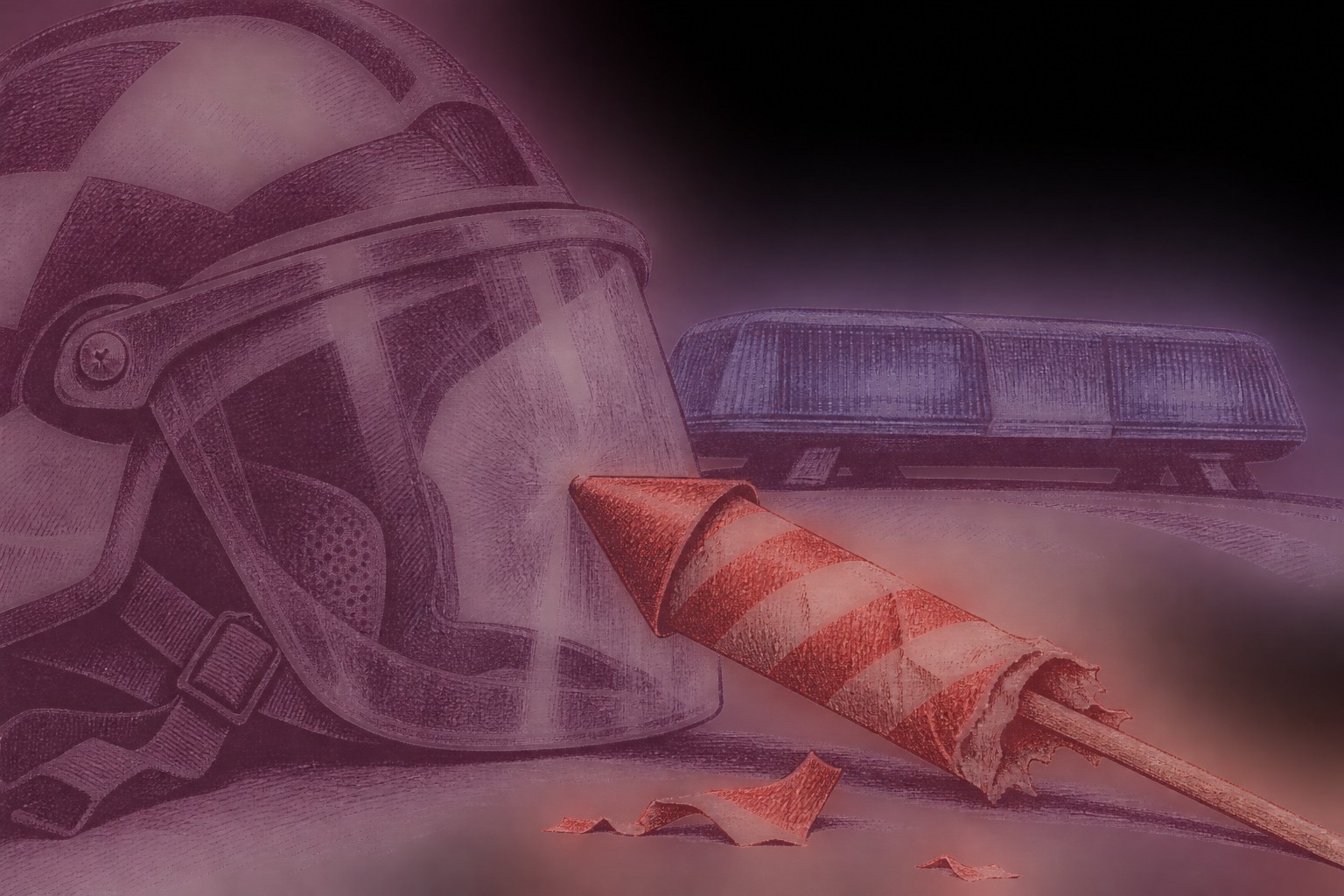
Scotland’s Bonfire Night disorder should not be reduced to a single claim that the country was either “out of control” or safer than before. The confirmed reports point to serious, localised attacks on people responding to emergencies, while Police Scotland’s own figures describe a more complicated national picture.
Police said seven people were arrested after disorder in parts of Scotland on 5 November. In Glasgow, officers and ambulance staff attending a report of an injured man in Greenside Street shortly before 8pm were targeted with fireworks, according to a police statement reported by the Guardian. A police vehicle was set alight and seriously damaged, and one ambulance worker sustained a minor injury.
The reported incidents were not confined to one street. Fire crews and police were targeted in several locations, including parts of Glasgow, Edinburgh, Ayrshire, South Lanarkshire and West Lothian. The Scottish Fire and Rescue Service received more than 800 calls related to fireworks and bonfires between 5.30pm and 11.30pm, the Guardian reported.
That makes the scale of the emergency-service response significant. But it does not establish a simple national trend. Police said they received 1,024 fireworks-related calls between Halloween and 5 November, up from 833 in 2025. At the same time, they said the number of incidents requiring a specialist public-order response had fallen across Scotland.
Those statements can coexist: a rise in calls does not necessarily mean more incidents met the police threshold for specialist deployment. Yet the supplied reports do not define that threshold or provide comparable local totals. The responsible conclusion is therefore narrower than either reassurance or alarmism: attacks on responders and the burning of a police vehicle are grave events, while the wider comparison needs clearer published measures.
The next questions are concrete: where the seven arrests were made, what offences are alleged, and how Police Scotland defines and compares specialist public-order incidents.
Sources
- BBC UK · Source date: 2026-11-06
- The Guardian · UK · Source date: 2026-11-06
Independent editorial content. WUA is not affiliated with any political party. 2026-11-06