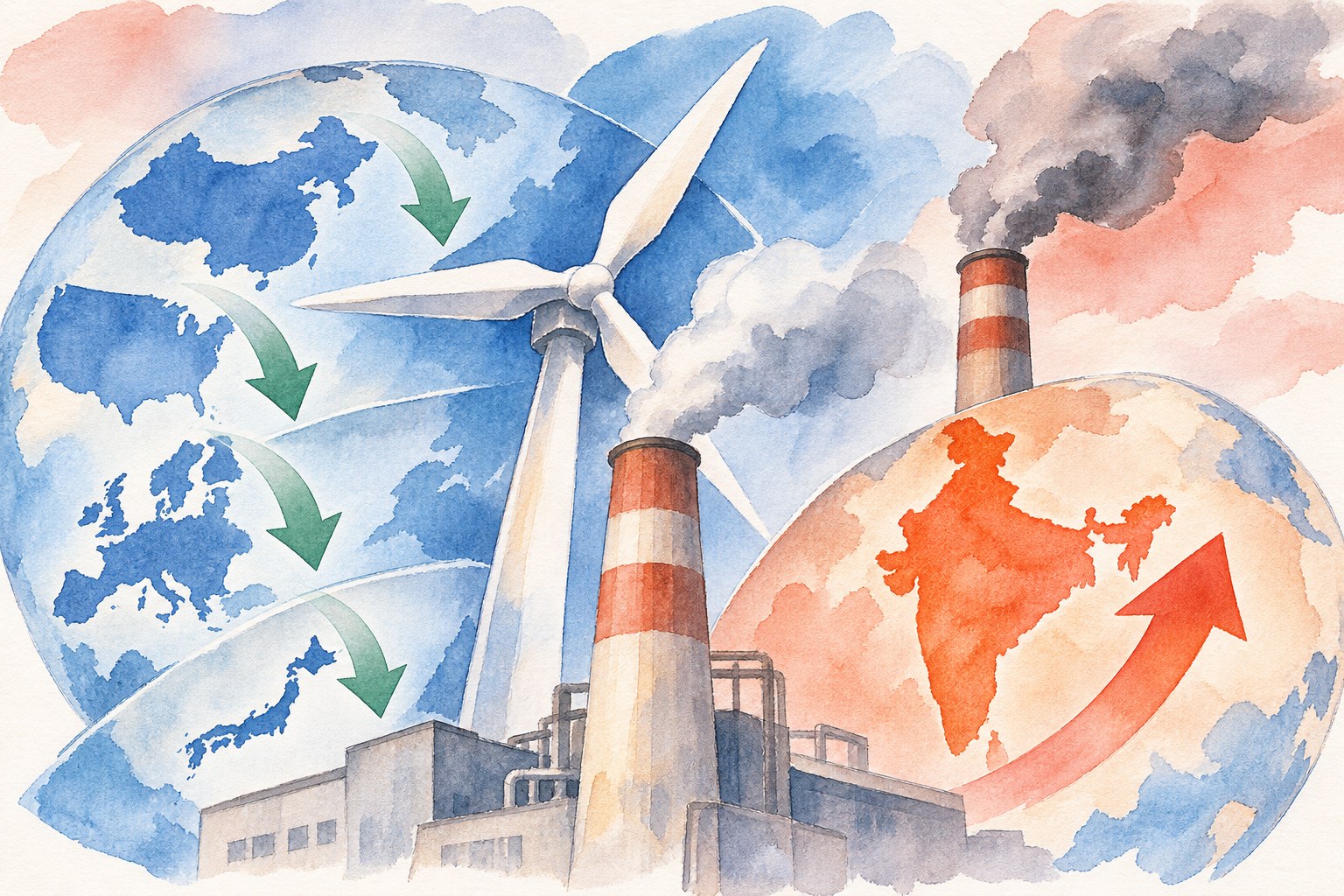
The Global Carbon Project projects that global CO2 emissions from fossil fuels will fall by 0.4% in 2026. That is a development worth watching, but it does not yet show that global emissions have entered a lasting decline.
Le Figaro reports that the study is being presented during COP31 in Antalya, Turkey. A year-on-year fall matters after repeated increases: it indicates that changes in the energy system can register at global scale. The newspaper also links the expected decline to the oil crisis caused by the blockage of the Strait of Hormuz and a faster shift toward lower-carbon energy sources.
Yet this is a projection for the full year of 2026, not a final annual count or evidence of a multi-year trend. The projected decrease is also small, at 0.4%. The country-level picture cited in the report calls for caution: emissions are projected to fall in China (-0.9%), the United States (-1.3%), the European Union (-1.5%) and Japan (-1%), while India is projected to rise by 4.4%.
That contrast is why 2026 should not be presented as an established turning point. A global decrease can coexist with rapid growth in a major economy, and an annual projection may change when year-end data are compiled. The available reporting also does not quantify how much of the expected change comes from the oil crisis and how much from the energy transition.
The Global Carbon Project forecast should therefore be treated as an encouraging signal, not a reason to declare the climate challenge turned around. The consequential test is whether major economies can sustain lower emissions beyond 2026, including where emissions are still expected to rise.
Sources
- Le Figaro Actualités · Source date: 2026-11-10
Independent editorial content. WUA is not affiliated with any political party. 2026-11-10