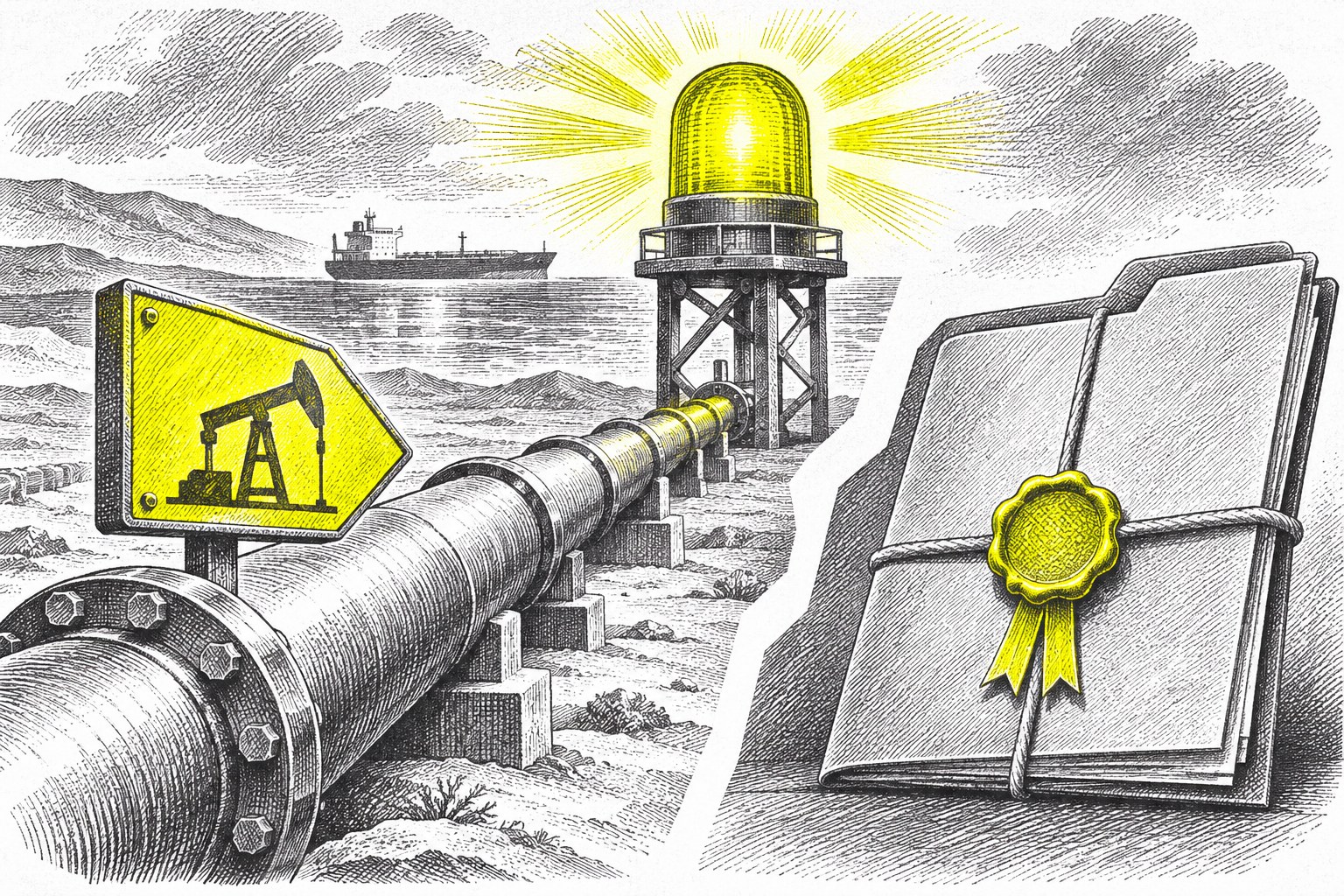
Saudi Arabia said its East-West Pipeline was targeted again on Monday, causing a fire that was later extinguished. The report by Der Spiegel says the kingdom also reported no injuries and no disruption to pipeline operations. It did not identify an attacker.
The incident gives the Gulf Cooperation Council’s planned joint military command post in Kuwait a more immediate context. The six GCC states agreed on the post after their defence ministers met in Manama and said the forces needed for it would be made available.
The East-West Pipeline can carry oil from the Persian Gulf to the Red Sea, bypassing the effectively blocked Strait of Hormuz. A reported attack on that route therefore highlights the pressure on Gulf governments to improve coordination around a strategically important export corridor.
The Kuwait command post is a concrete institutional move, but its role in such incidents has not been set out publicly. Der Spiegel reported no troop numbers, mandate, command chain, start date or assignment for protecting critical infrastructure. The report also says the GCC countries still lack a fully integrated common-defence system, with leadership and shared threat priorities unresolved.
That leaves a clear distinction between the political decision and a demonstrated protective capability. The GCC says closer military cooperation can strengthen protection of its territory, assets and people. Yet the available report does not establish that the planned command post will deter, respond to or protect against future attacks on energy infrastructure.
Sources
- Der Spiegel · Source date: 2026-11-10
Independent editorial content. WUA is not affiliated with any political party. 2026-11-11
GCC joint command post in Kuwait: A concrete security move, not a finished Gulf alliance