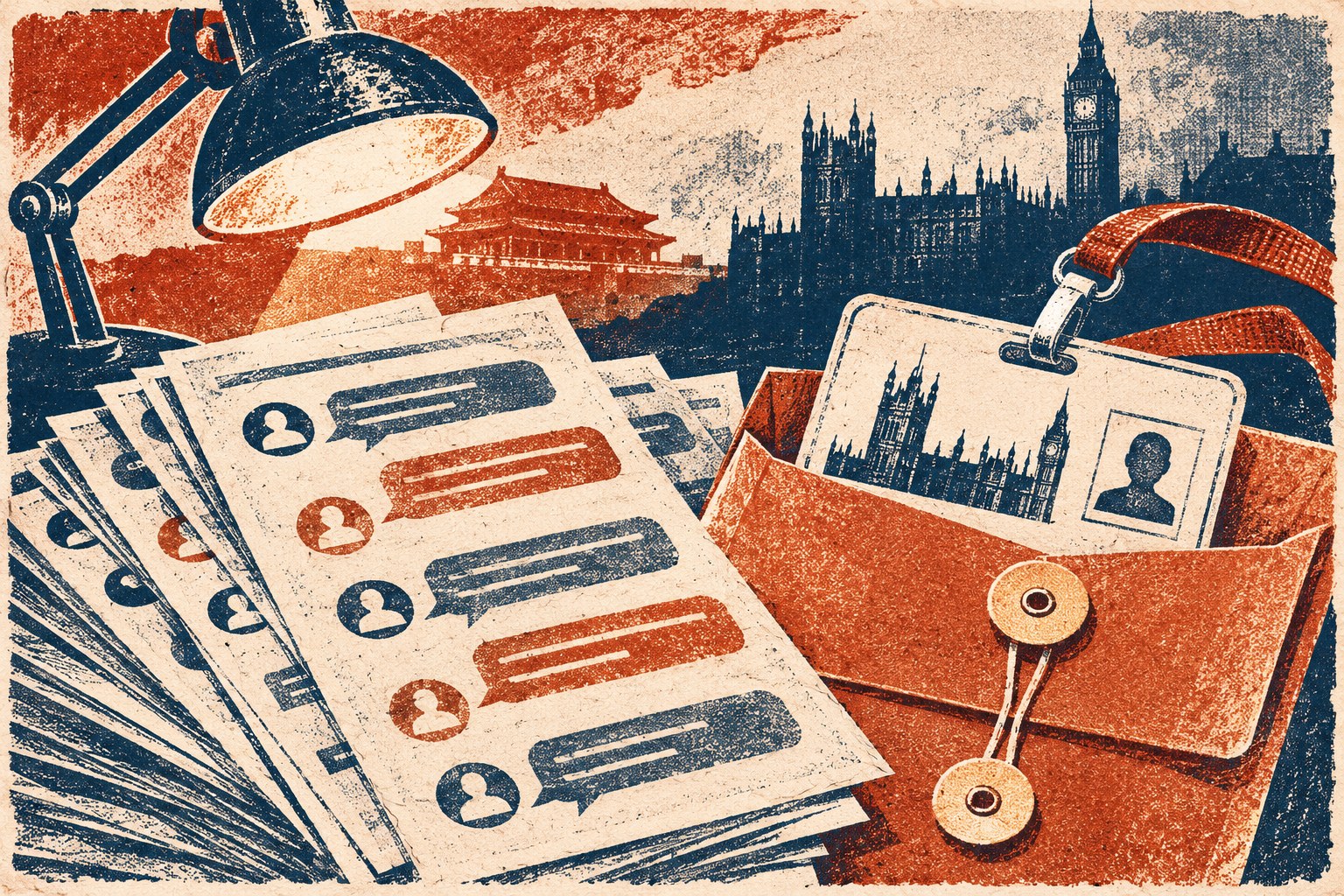
Chris Cash’s release of more than 6,000 messages adds concrete material to the public record of the China-spying case, but it does not overturn his acquittal or establish that parliamentary vetting failed.
In his first BBC interview since being acquitted, Cash said he had been a “convenient fall guy” for police and security services seeking to raise the profile of foreign-state espionage threats. That is his account, not a finding about the conduct of investigators or the wider security system.
The BBC reports that the messages show a Chinese official seeking information about sensitive political matters in the UK, including the 2022 Conservative leadership contest. It also reports that Cash’s friend, Chris Berry, described a secret meeting with a senior Chinese official and said China was concerned about the possible advancement of a sanctioned British MP. Such contacts are plainly relevant to public scrutiny of the case. They give readers more detail than the bare fact that two men were charged and later acquitted.
Another disclosed detail deserves focused attention: according to the BBC, Cash listed Berry as a reference during vetting for a parliamentary pass, and the application was approved. An approved pass is not, by itself, evidence of misconduct or proof that vetting rules were breached. But it is a legitimate reason to ask whether the process had enough information and whether the rules governing politically sensitive overseas contacts are adequate.
The strongest counterpoint is fundamental. Cash and Berry maintained their innocence, and Cash was acquitted. The material described by the BBC may illuminate relationships and requests for political information, but messages alone cannot determine criminal intent, legality or why the case ended in acquittal.
The useful lesson is narrower than either complacency or accusation. Public institutions should be able to explain how access checks handle relevant foreign contacts, while public debate must not turn disclosed associations into a substitute for a court judgment.
Sources
- BBC UK · Source date: 2026-11-11
Independent editorial content. WUA is not affiliated with any political party. 2026-11-11