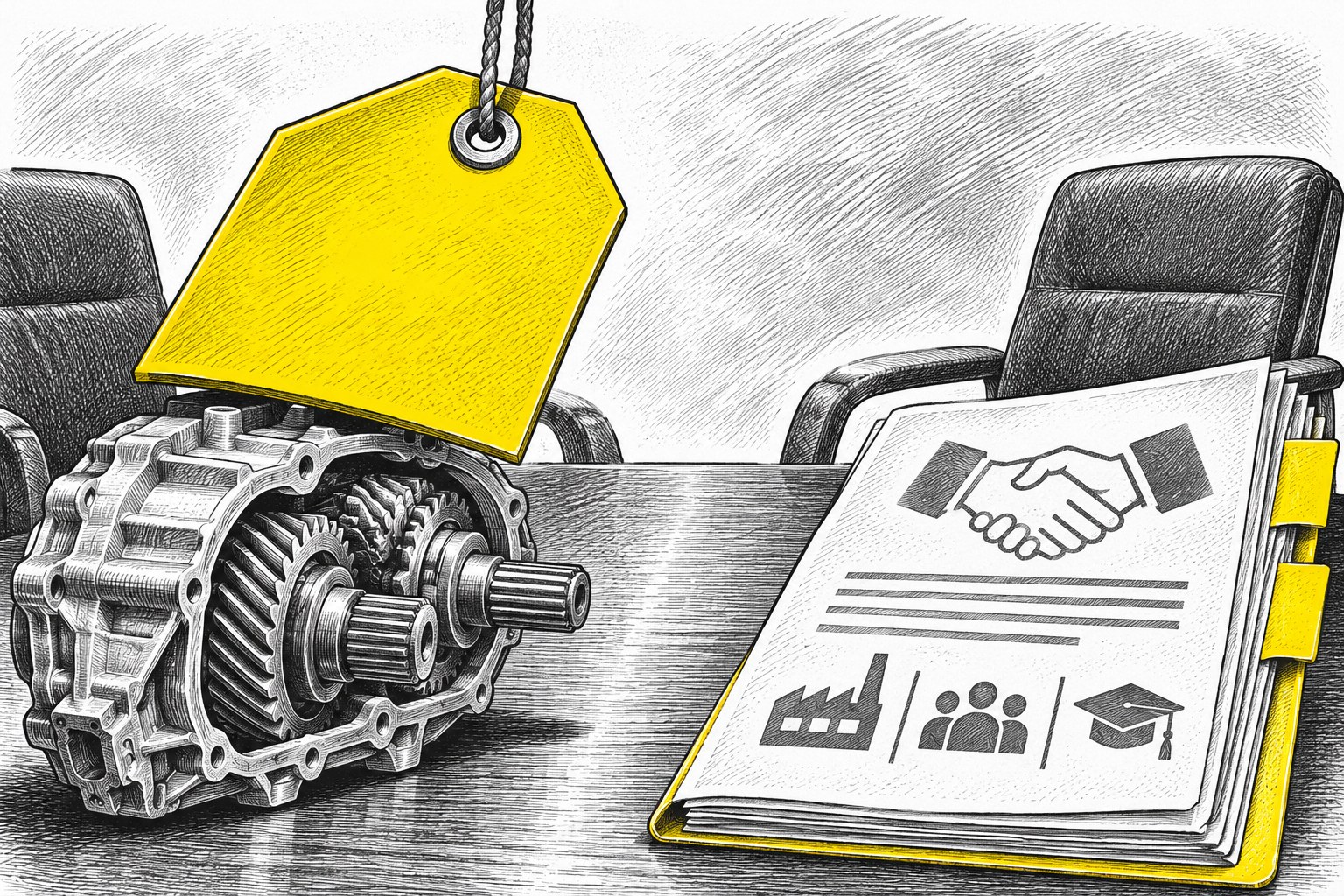
Mercedes-Benz chief Ola Källenius is seeking a substantial shift in productivity and labour costs during current talks in Germany. His suggestion that the country’s cost index could move from 100 to 80 is a management target, not an agreed restructuring plan. That distinction matters: any departure from collective standards should be traded for enforceable commitments on investment, jobs and training.
Speaking at an event hosted by Süddeutsche Zeitung, Källenius said Mercedes did not want a “lazy compromise”. In his view, Germany could have significantly less industrial activity in ten years if parties in the negotiations were unwilling to move far enough. He put Germany at 100 in a cost index, the United States at 80, and Hungary, Romania and China at lower levels. The SPIEGEL report does not disclose how that index is calculated, which years it compares or which costs it includes.
The intervention comes while Mercedes is talking with its works councils and remains bound by the metal and electrical industry’s collective bargaining round, according to SPIEGEL. The carmaker has followed falling sales and profits with cost-cutting programmes. Its board had already argued that an hour of work must become cheaper, with more work for the same pay presented as the most direct route. Employees subsequently protested.
A demand for lower costs alone does not settle what workers and German sites would receive in return. Källenius said he was open to an IG Metall proposal under which companies could make temporary departures from certain collective standards in exchange for binding commitments on future products, sites, jobs and training. That is a more credible framework than an open-ended call for concessions.
His warning about Germany’s industrial future is a forecast, not an established outcome. Nor does the report specify which pay, working-time or productivity rules could change. The test for the negotiations is whether Mercedes matches its cost case with commitments that workers and sites can actually hold the company to.
Sources
- Der Spiegel · Source date: 2026-11-11
Independent editorial content. WUA is not affiliated with any political party. 2026-11-11