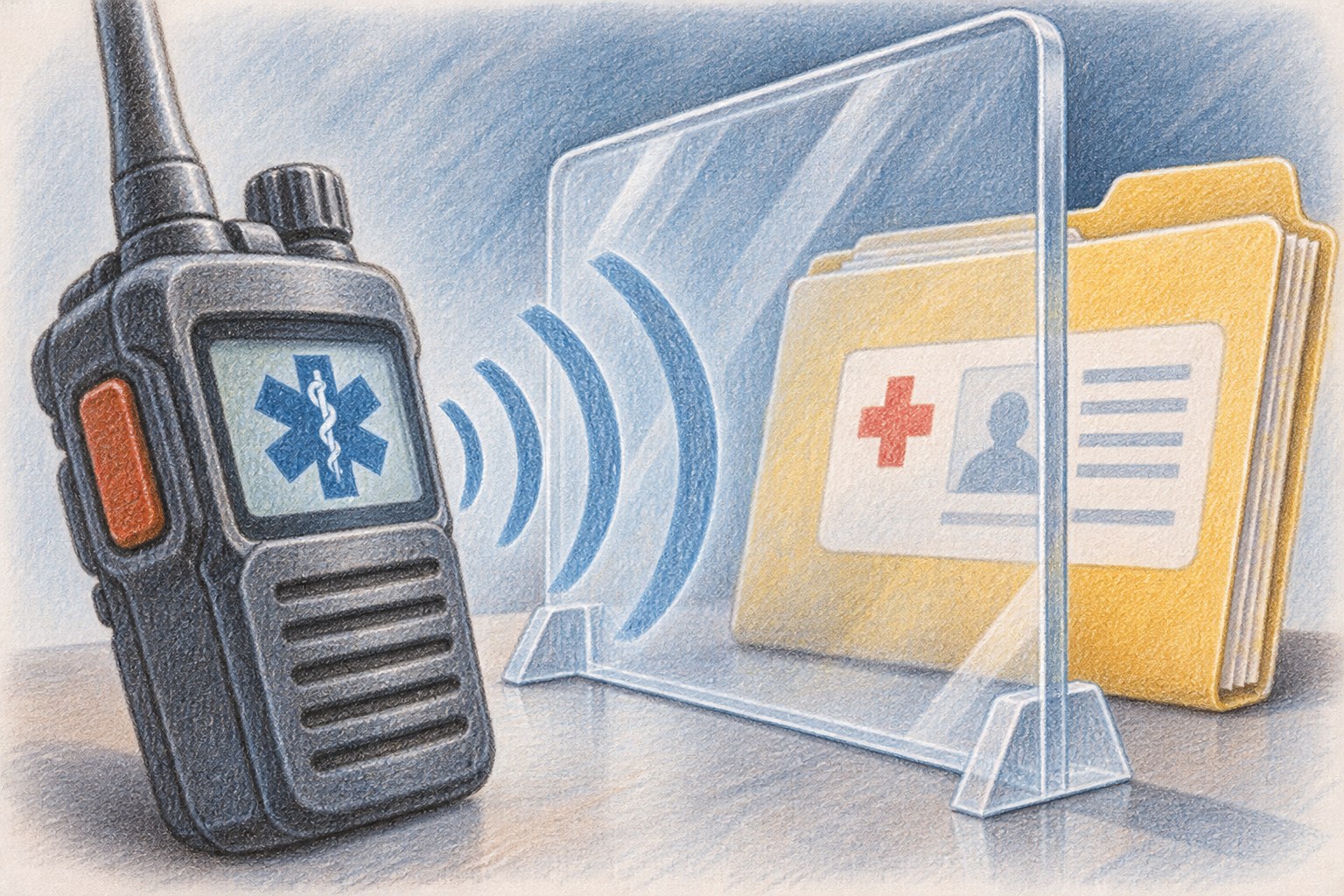
Der SPIEGEL has reported that unauthorised people may have been able to read radio messages from Saxony’s emergency medical services and fire brigades for years. If the account is borne out, the incident is more than a technical failure: diagnoses, names and addresses are among the most sensitive details handled during an emergency response.
According to the magazine, the messages contained precisely those categories of patient information. The Saxony State Criminal Police Office, the LKA, is investigating. That moves the matter beyond a routine systems fault and into a law-enforcement inquiry.
The central concern is the reported combination of duration and data sensitivity. People needing emergency help cannot meaningfully choose whether the details necessary for their care are transmitted. That makes robust protection of the communications systems a basic responsibility. A long period of unauthorised access, if established, would raise serious questions about the data governance of the bodies involved.
The public response should not stop at the opening of an investigation. Authorities need to explain how access may have been possible, what period may be affected and which organisations operated or secured the communications. It also matters whether, and how, people whose data may have been exposed will be informed.
The supplied report does not provide those answers. It gives no details of the technical route, the number of people affected, or whether messages were stored, shared or used for another purpose. The LKA inquiry is therefore a necessary start, but not yet an answer to the duty to protect people whose most private information was transmitted during an emergency.
Sources
- Der Spiegel · Source date: 2026-11-11
Independent editorial content. WUA is not affiliated with any political party. 2026-11-11