France’s fraud watchdog, the DGCCRF, said on 13 November that 9% of the 1,271 establishments inspected in its 2024 review of origin claims on non-food products received a sanction. Its central message is practical: packaging, bottling or conditioning a product in France does not by itself justify presenting it as French-made.
As reported by BFMTV, the DGCCRF also said that being a French company, using a supplier based in France, or carrying out one operation in France is not enough on its own to establish French origin. Those facts may describe part of a product’s commercial or production path, but they are not equivalent to substantiated origin.
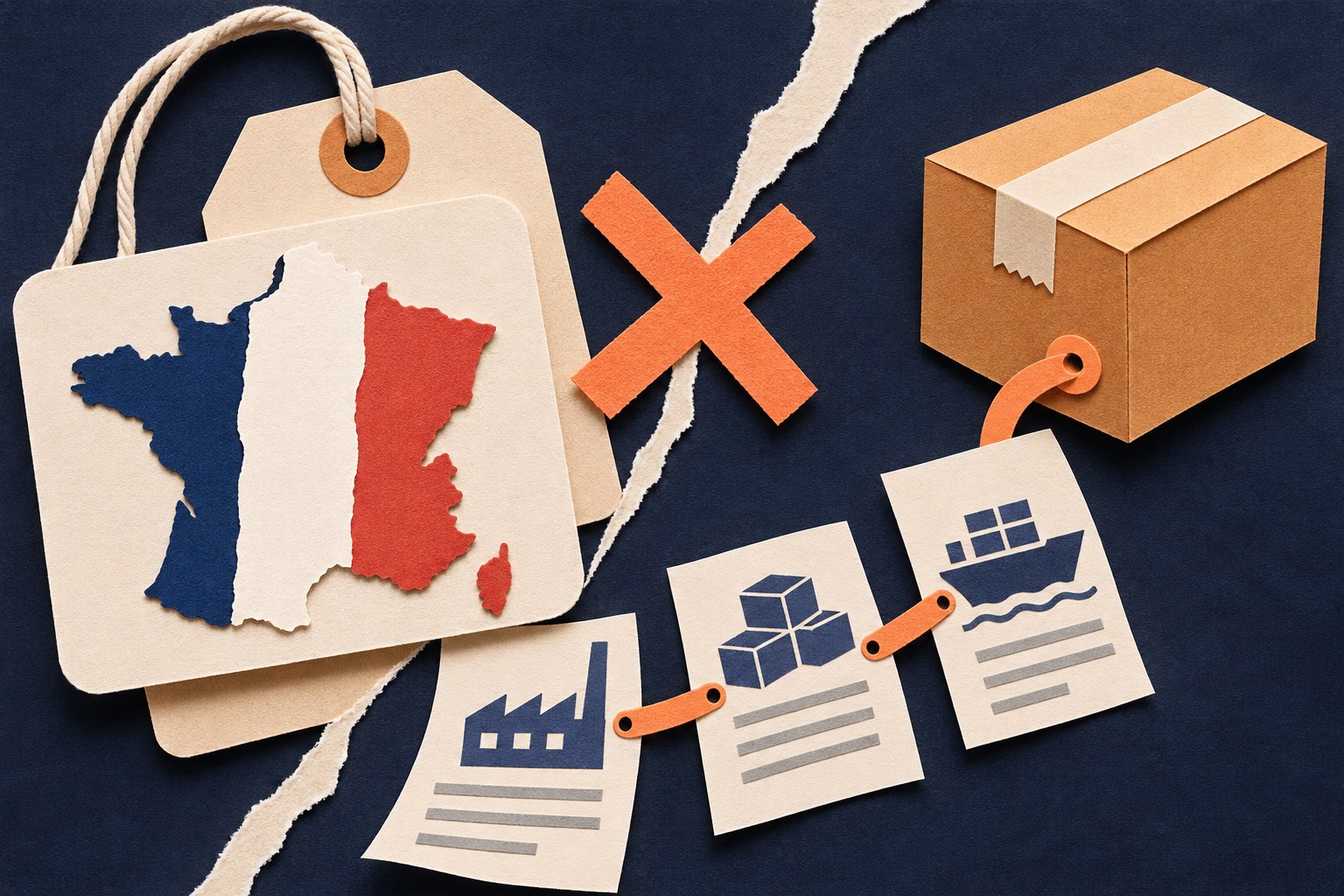
The regulator’s concern also extends beyond wording. It flagged potentially misleading practices including the use of a French flag or a map of France. That matters because consumers can receive an origin message through an overall presentation, not only through the words “Made in France.” A tricolour cue or a French location can suggest provenance without demonstrating it.
Libération reported that the results were released a day after the opening of a trade show devoted to the label. The supplied material does not identify the sectors, companies, types of sanction or amounts involved. It therefore cannot establish which businesses were penalised or whether a particular product category was more affected.
The enforcement result does, however, draw a useful line for both sellers and buyers. French production and employment can be meaningful claims when they are accurately described. The problem identified by the DGCCRF is allowing a packaging step, company nationality or national imagery to stand in for evidence that a product is actually of French origin. Clearer distinctions protect consumers and prevent documented origin claims from being diluted by suggestion.
Sources
- Libération Actualités · Source date: 2026-11-13
- BFMTV Actualités · Source date: 2026-11-13
Independent editorial content. WUA is not affiliated with any political party. 2026-11-13