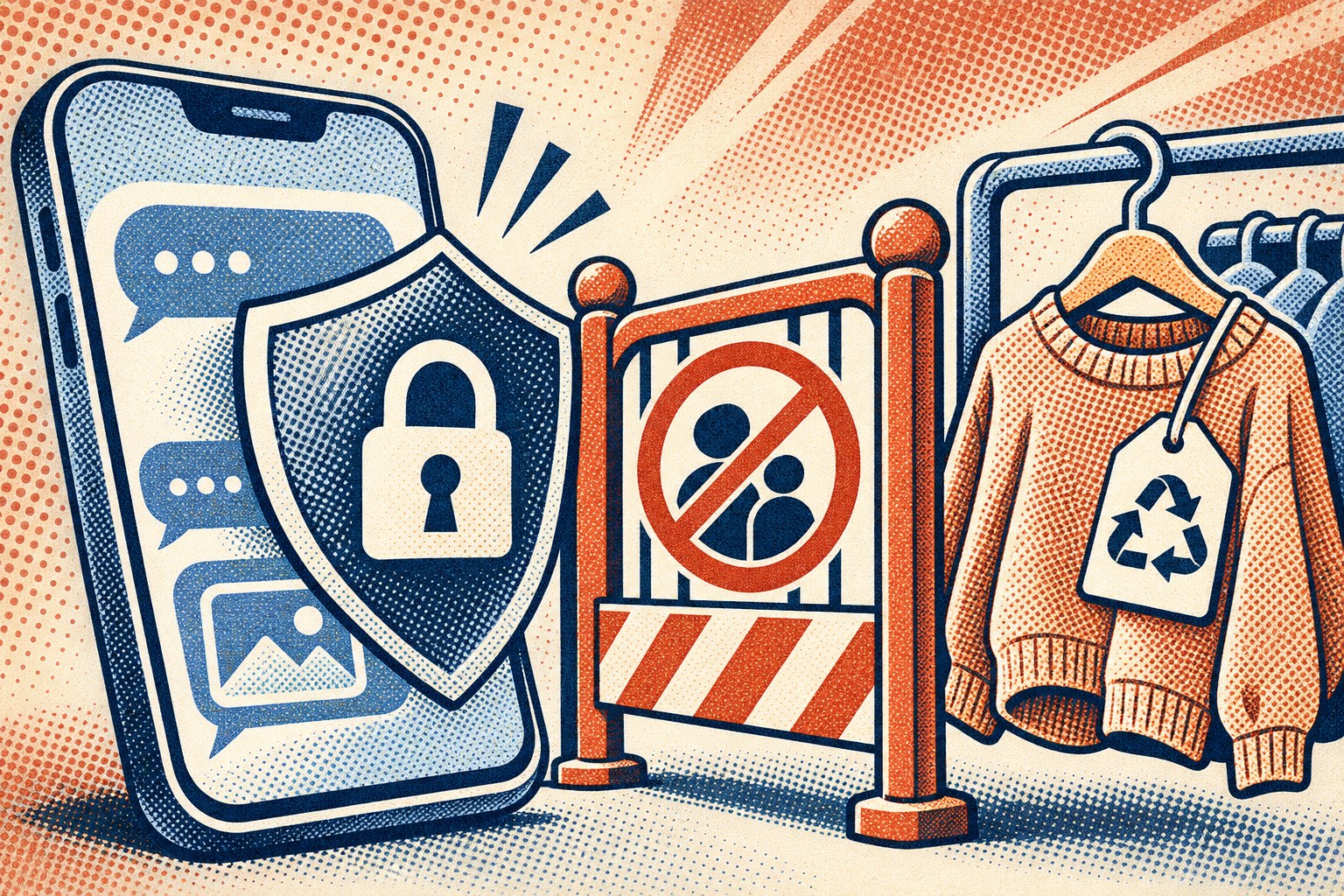
UK ministers are reportedly considering extending planned under-16 social-media restrictions to online marketplaces. That would recognise a basic problem: a resale app with private messages and user photos can create child-safety risks even when it is not usually described as social media.
The case for action is not abstract. The Guardian reports accounts from young sellers who received sexualised messages through resale platforms, and reports that images posted to sell clothes were later copied or manipulated elsewhere. Ofcom has found that 15% of eight- to 14-year-olds use Vinted each month. Vinted says its minimum age is 18, although it permits minors to access the service under an adult account holder's supervision; Depop allows accounts from age 13, subject to payment restrictions.
Culture secretary Lisa Nandy said the government was “looking seriously” at including online marketplaces in the under-16 ban. The Guardian reports that proposed regulations were sent for cabinet signoff this week and that Nandy is expected to present them to parliament in December.
Extending the policy would draw attention to a gap in the usual category labels. A marketplace is not harmless simply because its main purpose is buying and selling: messaging, image-sharing and weak barriers to entry can expose young people to the same forms of contact and image misuse found on other platforms.
But a wider ban is not, by itself, a complete safety policy. Karen Garland of the Marie Collins Foundation told the Guardian that spaces used by children should be safer by design, and warned that extending a ban may not be the best overall route. That objection matters. A rule that blocks younger users while leaving reporting systems, message controls, image protections and age checks opaque would move responsibility without showing how risk is reduced.
The reported proposal deserves scrutiny because its details have not been published. The final list of platforms, the legal basis, age-verification requirements, exemptions and commencement date remain unspecified. Parliament should test whether the rules require measurable safeguards from companies, rather than treating access restriction as the whole answer.
Sources
- The Guardian · UK · Source date: 2026-11-13
Independent editorial content. WUA is not affiliated with any political party. 2026-11-13