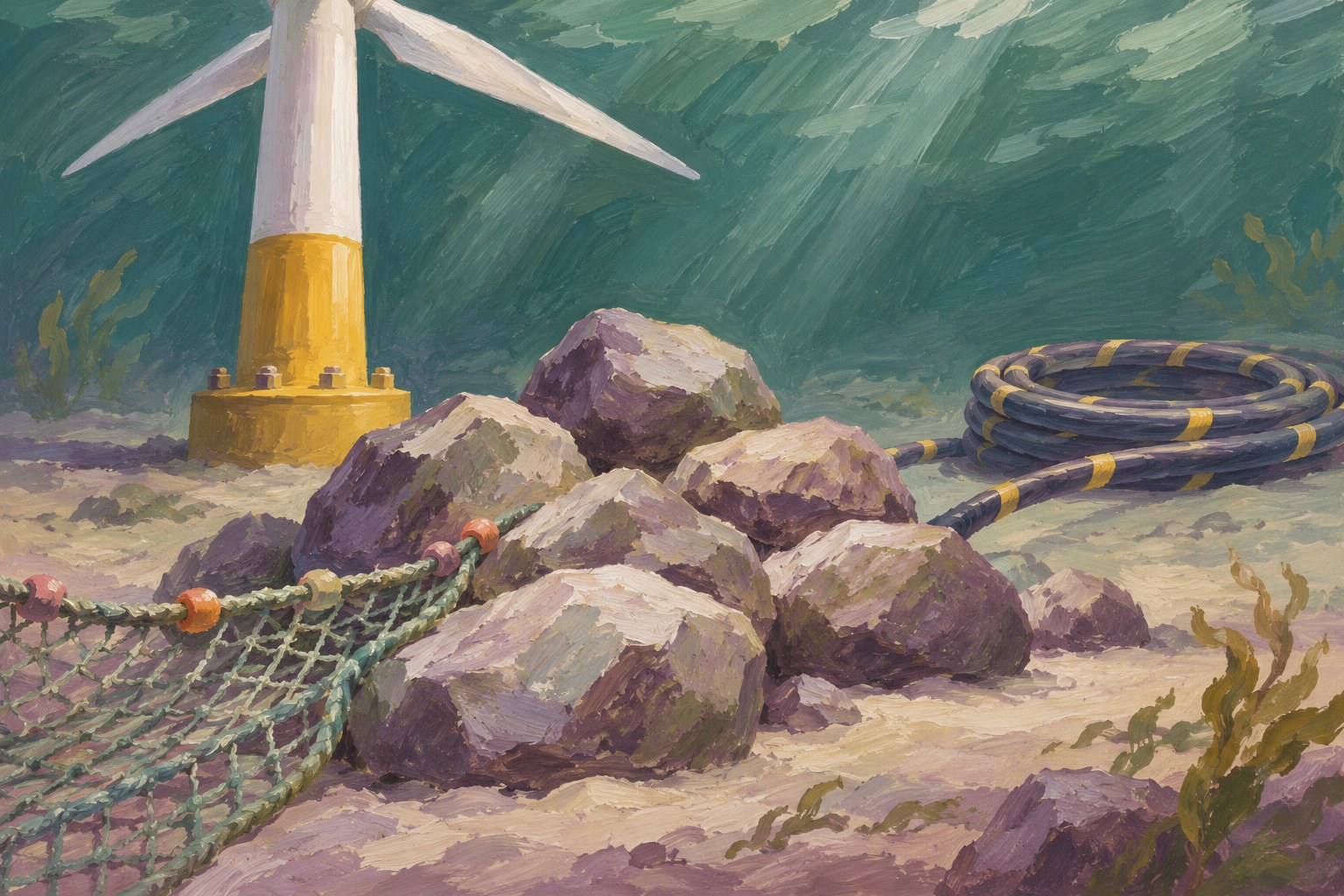
Greenpeace’s boulder barrier off Norfolk has created a concrete problem for the Norfolk Vanguard East windfarm: an anti-trawling action intended to protect the seabed now overlaps with a major offshore renewable-energy site. The lesson is not that one environmental aim must defeat the other. It is that physical interventions at sea need clear consent, location data and responsibility for their consequences.
The Guardian reported that Greenpeace dropped about 15 tonnes of boulders, some weighing up to two tonnes, to deter bottom trawling in a heavily trawled part of the southern North Sea. Most of the rocks, however, were placed within the area earmarked for Norfolk Vanguard, one of the UK's largest planned windfarm projects. The action began without consent from the marine authority, according to the report.
RWE, the developer, is now talking with Greenpeace to establish the boulders' exact positions and update seabed surveys begun last summer. It is also investigating possible effects on construction and undersea cables. That is the immediate issue: survey work and cable routes cannot be treated as abstract inconveniences when objects have been deliberately placed on the seabed.
Greenpeace argues that the concern is overstated. Its UK co-executive director, Will McCallum, said offshore wind companies routinely move naturally occurring boulders that can be far heavier, and said the group remains a supporter of offshore wind. That is a relevant point. The supplied report does not show that the project will be delayed or that the rocks cannot be moved.
But routine engineering capability is not a substitute for coordination. Greenpeace’s campaign may highlight a real failure to protect the seabed from bottom trawling, yet placing a barrier without marine consent inside a planned construction area shifts new work and risk onto others. RWE and Greenpeace should publish, as far as safety and commercial constraints allow, the mapped locations, the construction implications and who will manage any removal. The marine authority should also state how it will address the unauthorised placement. Shared environmental objectives deserve more than a collision managed after the rocks are down.
Sources
- The Guardian · UK · Source date: 2026-11-14
Independent editorial content. WUA is not affiliated with any political party. 2026-11-14