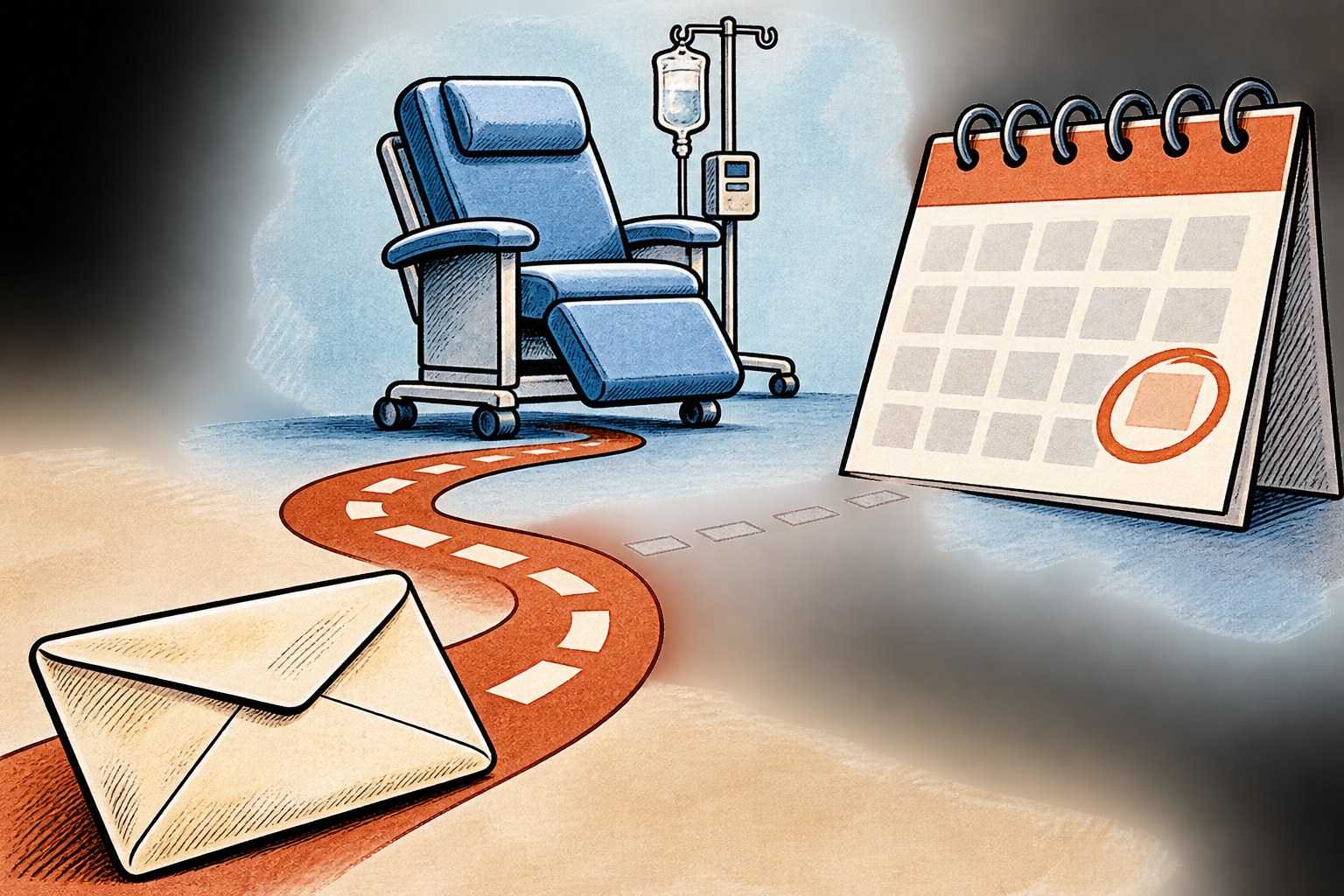
NHS England is not on the reported trajectory to meet its March 2027 cancer-treatment target, and ministers should now set out a public recovery plan rather than rely on year-on-year improvement alone.
The interim standard is for 80% of patients to start treatment within 62 days of an urgent referral or consultant upgrade. NHS figures reported by the Guardian put the September rate at 70.7%, down from 71.9% in August. That is the central problem: a target can be improving against last year and still be moving too slowly for its own deadline.
Radiotherapy UK estimates that, if patient volumes remain consistent, 24,400 people a month would need to begin treatment within the standard to reach 80% by March. It says the current figure is about 21,500, leaving a monthly gap of 2,850 and a projected cumulative shortfall of 9,490. The calculation depends on stable volumes and has not been independently reproduced here, but it gives the government a specific figure to address.
The reported gaps are not evenly shared. Timely treatment stood at 60.9% for lung cancer, 60% for gynaecological cancers and 56.5% for head and neck cancers. The Midlands recorded 66.6%, compared with 77.3% in London. Those figures make a national average an inadequate account of the pressure facing particular services and places.
The Department of Health and Social Care says all three cancer standards are better than a year earlier and that about 290,000 more people were diagnosed on time or had cancer ruled out over the past year than before the election. That progress matters. But earlier diagnosis only delivers its full benefit when treatment capacity follows, as clinical bodies cited by the Guardian argue.
The immediate test is practical: NHS England and the government should publish how they intend to close the monthly gap, including workforce, diagnostic and treatment capacity, and how they will address the reported cancer-type and regional disparities. Without that route, the March target risks becoming a benchmark for explaining failure rather than improving care.
Sources
- The Guardian · UK · Source date: 2026-11-14
Independent editorial content. WUA is not affiliated with any political party. 2026-11-14