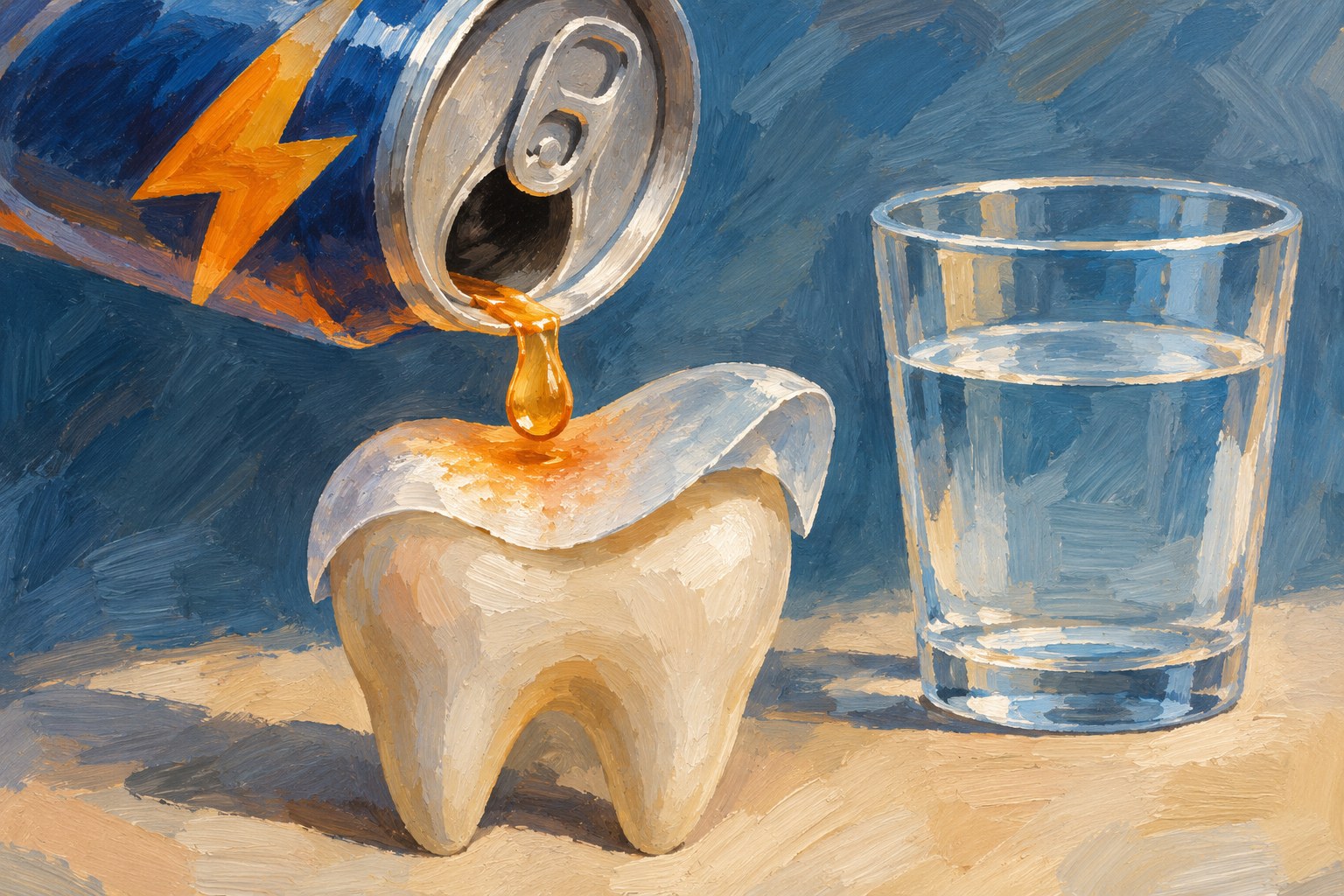
A reported increase in treatment measures for tooth erosion this year, compared with 2025, gives Sweden a specific youth-health warning that goes beyond a general nutrition message. Dagens Nyheter reports that dentists are seeing more worn and sensitive teeth and identify acidic soft drinks, juice and energy drinks as contributors to the damage.
The central point is that sugar-free does not mean acid-free. Tooth erosion occurs as enamel and dentine wear away. A sugar-free energy drink may therefore still harm teeth if it is acidic. DN reports that damage can develop before a person notices sensitivity; by the time teeth start to sting, enamel may already be affected.
The concern matters because DN cites a survey backed by, among others, the Swedish Food Agency. Nearly three in ten Swedish 15-to-19-year-olds reportedly drink energy drinks at least once a day, while three in four drink them weekly. Dentists suspect that rising energy-drink sales contribute to the trend, particularly where people sip acidic drinks over a long period.
That suspicion should not be inflated into a settled causal finding. DN explicitly says it cannot say with certainty that soft-drink consumption causes the increase. The article also does not provide the number of treatment measures, the scale of the year-on-year change, or regional detail.
Still, the reported trend is enough to correct an overly narrow debate about sugar. When treatment measures rise and frequent energy-drink use among young people sits alongside dentists’ warnings, acidity deserves attention in its own right. The evidence supports concern and clearer distinctions, not a claim that one drink category alone explains every case.
Sources
- Dagens Nyheter · Source date: 2026-11-16
Independent editorial content. WUA is not affiliated with any political party. 2026-11-16