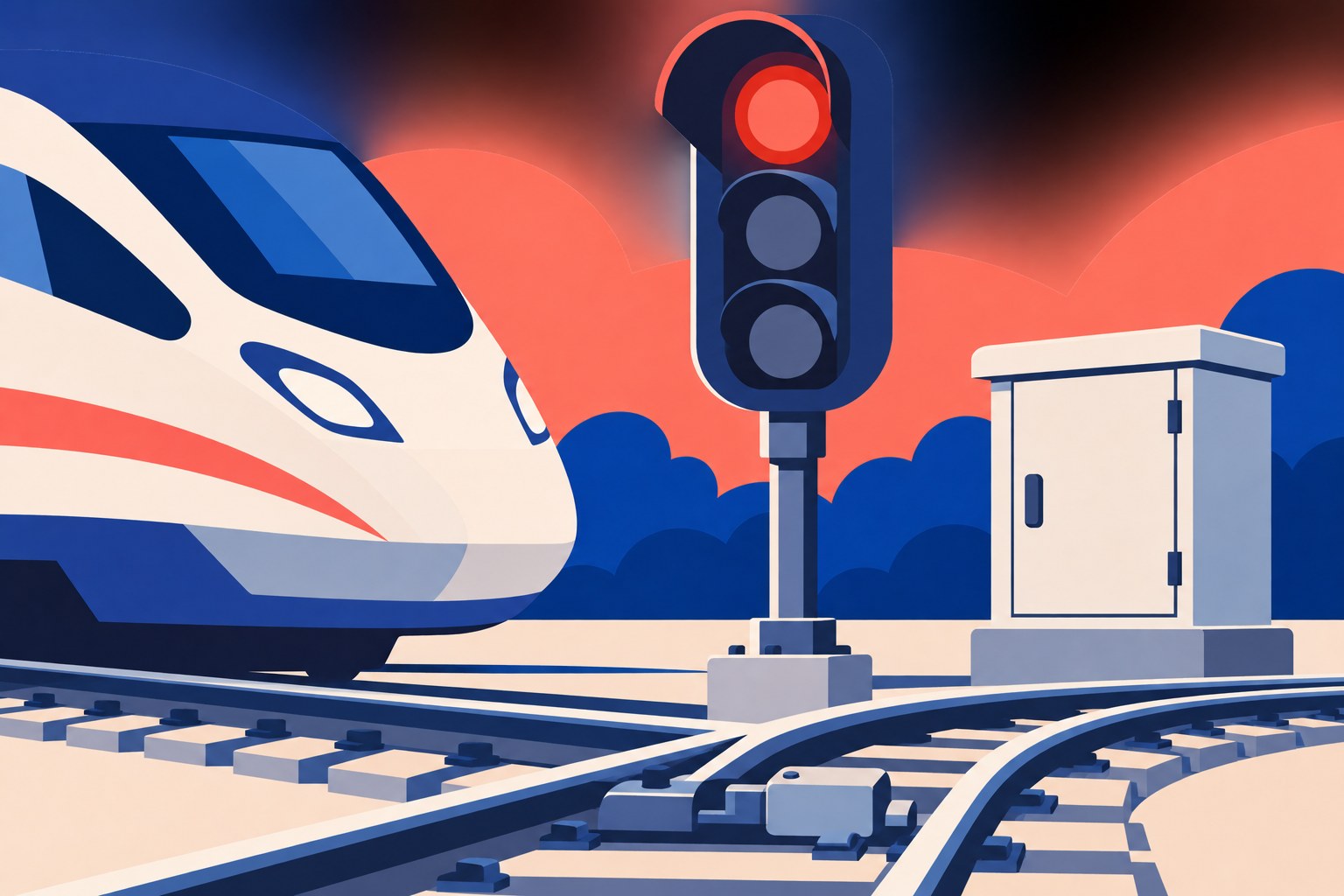
Spain’s College of Civil Engineers has proposed more intermediate signals on high-speed rail lines after the Urda rail crash. The proposal matters because it turns attention from a single failure scenario to the strength of the backup layer intended to protect rail operations when primary systems are not enough.
A document prepared by the College’s follow-up commission, as reported by elDiario.es, says the Lateral Signalling Block system, or BSL, has “serious limitations” in its design and operation as a backup safety system for high-speed rail. The professional body has set out ten technical points and ten preliminary proposals, including additional intermediate signals.
That warning deserves a substantive response, not a premature verdict. If a high-speed network relies on a backup system, its degraded-mode protections must give drivers and operators workable, understandable safety margins. More intermediate signals may strengthen that layer, but the supplied report excerpt does not specify which routes would be covered, the cost or timetable, or how the proposal would interact with other control systems.
ElDiario.es describes the Urda crash as an AVE train striking an Iryo train, killing 69 people. The scale of the loss makes scrutiny of safety design imperative. Yet the engineers’ recommendation is not, by itself, a finding that BSL caused the crash or that any institution or person bears responsibility.
The necessary next debate is therefore narrower and more useful: investigators should test the engineers’ concerns against the crash evidence, while infrastructure managers, operators and public authorities explain whether the present backup design provides adequate protection or needs revision.
Sources
- elDiario.es · Source date: 2026-11-16
Independent editorial content. WUA is not affiliated with any political party. 2026-11-16