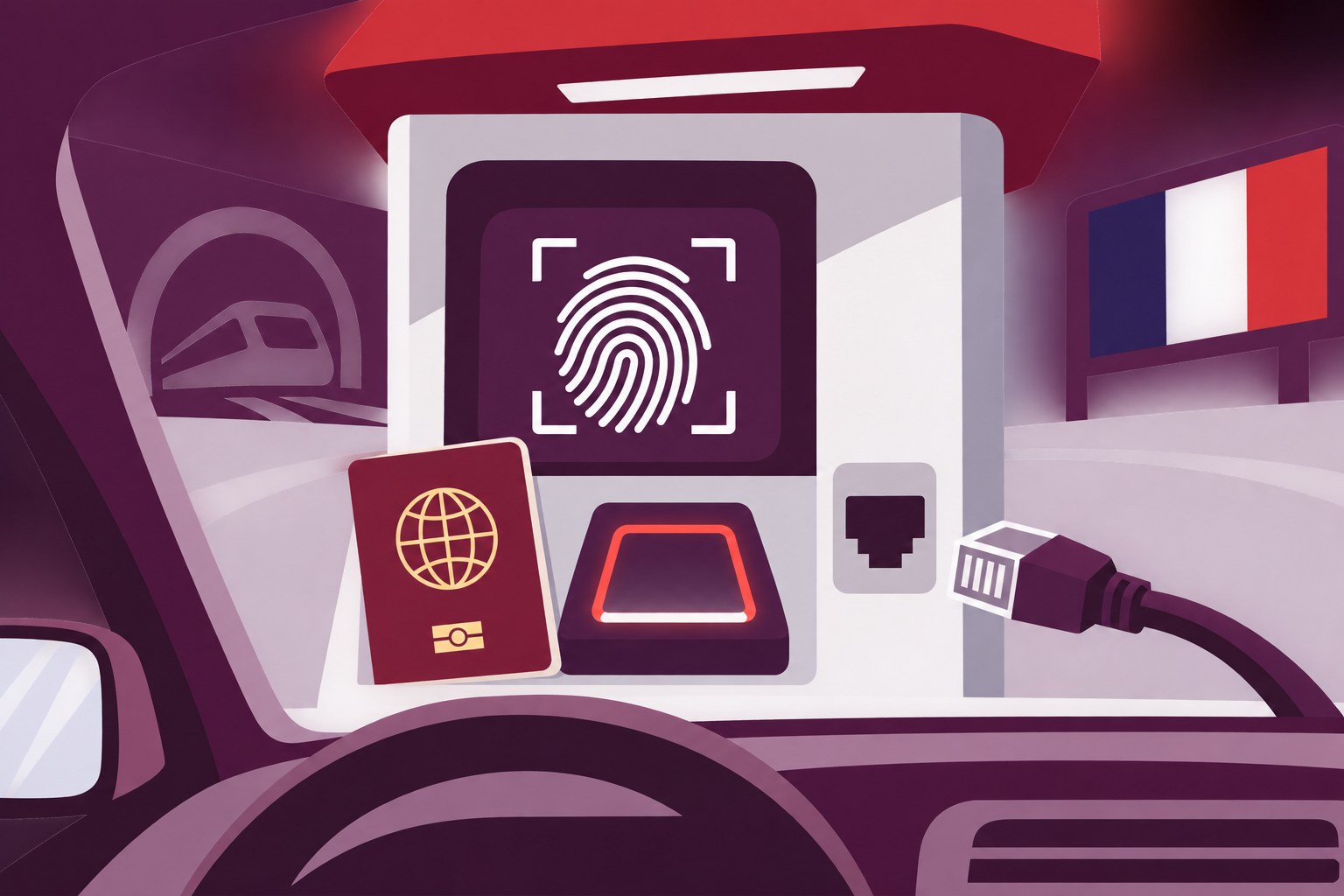
Eurotunnel’s approved trial of drive-through biometric checks offers a practical answer to one of the most awkward consequences of the EU’s Entry/Exit System: how to collect fingerprints and facial images from people in cars without turning the Channel crossing into a bottleneck. But it is a trial, not a promise of frictionless travel.
The Guardian reports that the European Commission has agreed to let Eurotunnel use an “eagle-eye” camera system to supervise biometric capture at special drive-through terminals in Folkestone and Calais. The proposed arrangement would allow passengers to remain in their vehicles while using kiosks for passport, fingerprint and facial-image checks, rather than parking and entering a terminal building.
That matters because EES applies to third-country citizens, including British passport holders, when they enter and leave the Schengen area. Eurotunnel has long faced a specific logistical problem: a border process designed around biometric registration can become much slower when every passenger arrives by car. A monitored in-car kiosk is therefore more than a cosmetic upgrade. It is an attempt to adapt the system to the route people actually use.
Getlink says both sides have 120 kiosks and that French authorities support the trial. Its chief executive, Yann Leriche, argues it could prevent short- and long-term disruption. The strongest case for the plan is straightforward: keeping travellers at their vehicles should remove one obvious source of confusion and delay, especially at busy periods.
Yet the same report sets out the limit. Leriche said the connection to the French system was still not working and he did not know when France would introduce it. France is among nine EU states that, according to the report, had not fully deployed EES because of technical issues. The supplied material also gives no start date, throughput estimate, privacy arrangements or independent assessment framework for the trial.
For travellers, the immediate change is an approved route towards in-car registration, not a new guarantee of shorter queues. The value of the trial will depend on whether the French EES link works in practice and whether the system can handle peak traffic without shifting delays elsewhere.
Source: The Guardian.
Sources
- The Guardian · UK · Source date: 2026-11-14
Independent editorial content. WUA is not affiliated with any political party. 2026-11-14