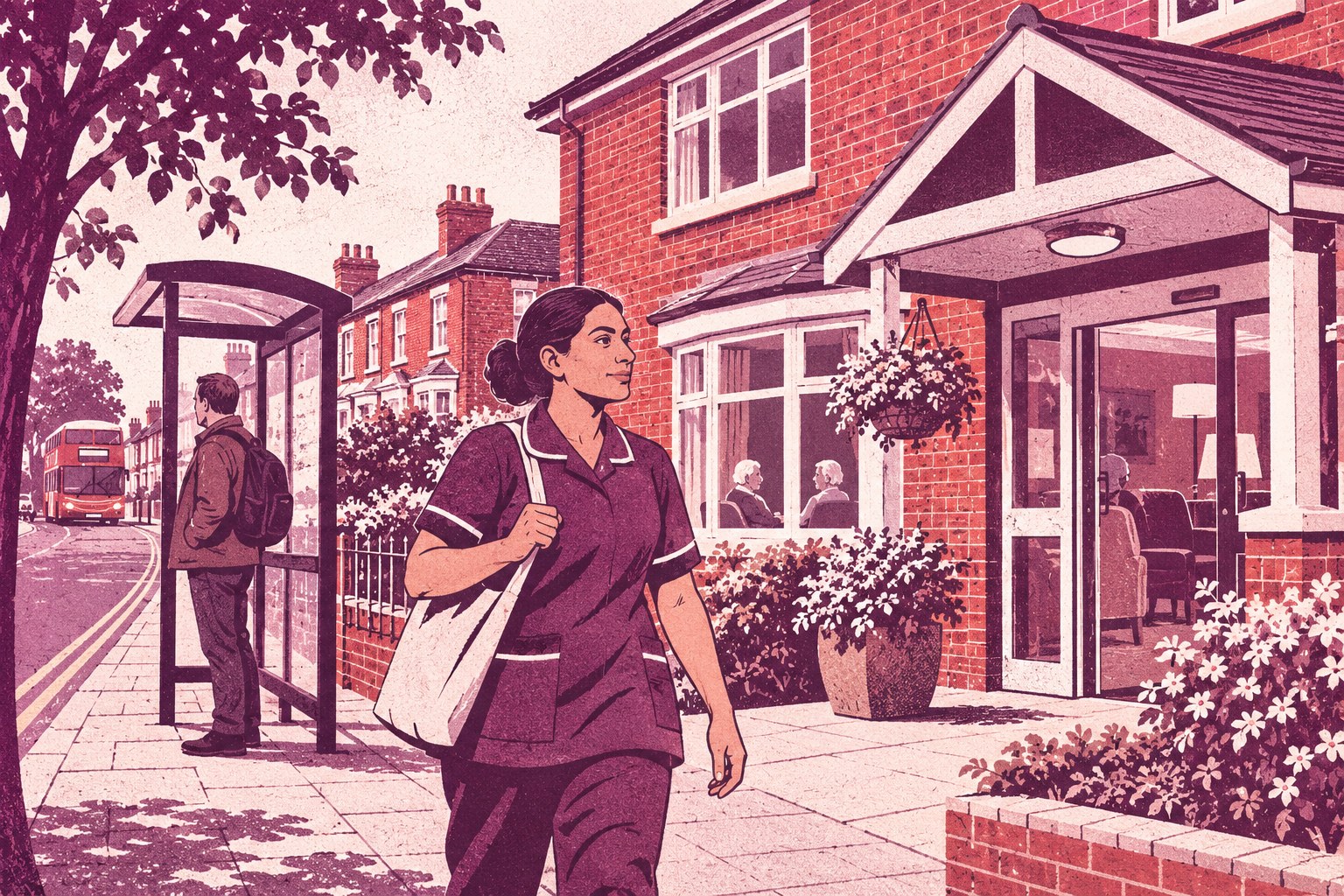
Mahmood settlement plans now make a narrower claim than the original proposal: some care workers can keep a five-year route to settlement, while the government retains a longer and more differentiated system for many others. That may be a necessary adjustment for social care, but ministers have yet to publish the full cost of the revised design.
On 2 November, Home Secretary Shabana Mahmood revised the proposal for migrant care workers already in the UK. According to the BBC, those who arrived before May 2025, earn at least £25,000 a year and meet the stated conditions can retain a five-year route to indefinite leave to remain. Care workers who do not qualify can apply for a new five-year visa and then seek settlement.
This is significant because the earlier proposal to apply longer waits to people already in the country drew criticism from Labour MPs. Some said the retrospective approach changed the goalposts; others warned it could worsen skills shortages, particularly in care. The revised route does not settle that wider argument, but it recognises that a uniform extension of waiting periods can collide with the needs of a sector dependent on its workforce.
Nor is the change a restoration of the previous framework. Mahmood says roughly 500,000 people already in the UK will no longer settle after five years. The BBC reports that the revised plan would delay settlement for 517,000 people, compared with 799,000 under the original version. People earning below £50,000 are generally placed on a 10-year route unless exempt, while some higher earners, specified health and education workers, and other listed groups have different routes. Income and occupation are therefore important parts of the system, alongside exemptions and route-specific rules.
The government says the reforms will save billions by reducing future benefit spending, and supporters can reasonably argue that preserving a route for qualifying care workers is a more balanced policy than imposing the same delay across the board. But on 3 November Mahmood declined to state the full cost of the revised policy, saying detailed figures would be published when the changes are put before Parliament. That leaves the fiscal case incomplete, rather than disproved.
The next test is the impact assessment: it should set out the revised costs, the basis for projected savings, the affected groups and whether the final rules create staffing risks in social care.
Sources
Independent editorial content. WUA is not affiliated with any political party. 2026-11-03