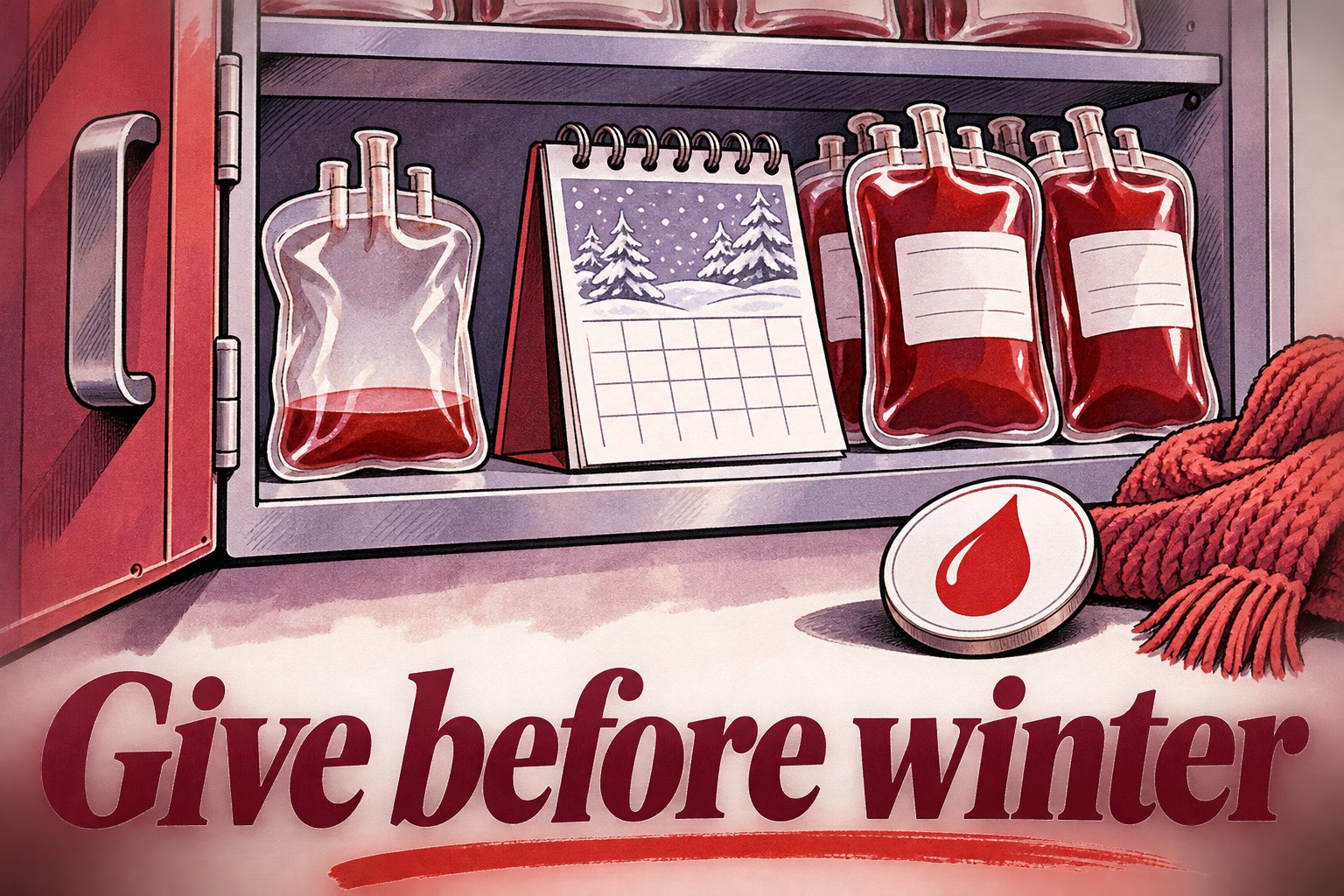
UK blood services are asking for 150,000 donations before winter, a concrete appeal that deserves a concrete public response. But the warning should also bring clearer information about where pressure is greatest, rather than broad claims that the whole health system is already unable to cope.
The Guardian reported on 16 November that blood services had issued an urgent appeal to help the NHS meet the usual rise in winter demand. Officials said supplies had fallen particularly low and that reserves of certain blood types were only half the level considered necessary.
That makes the appeal more than a routine seasonal reminder. Blood cannot be replaced by a late procurement order when demand rises: donation depends on people making and keeping appointments. A target of 150,000 donations puts a visible scale on the task and gives eligible donors a direct way to help strengthen supplies before winter demand intensifies.
The available report also sets limits on the claim. It does not name the blood types affected, say how long the 150,000-donation drive will run, or provide evidence that operations, transfusions or hospital services have already been disrupted. Nor does a warning about certain reserves establish that every blood type or every part of the UK faces the same shortage.
Those distinctions matter. Overstating the position can create needless alarm; understating it risks treating donation as a vague civic gesture rather than an essential part of NHS capacity. Blood services should publish accessible, regularly updated detail on the types and areas under greatest pressure, alongside the appeal. The public case is strongest when people can see both the urgency and the precise need they can help meet.
Sources
- The Guardian · UK · Source date: 2026-11-16
Independent editorial content. WUA is not affiliated with any political party. 2026-11-16