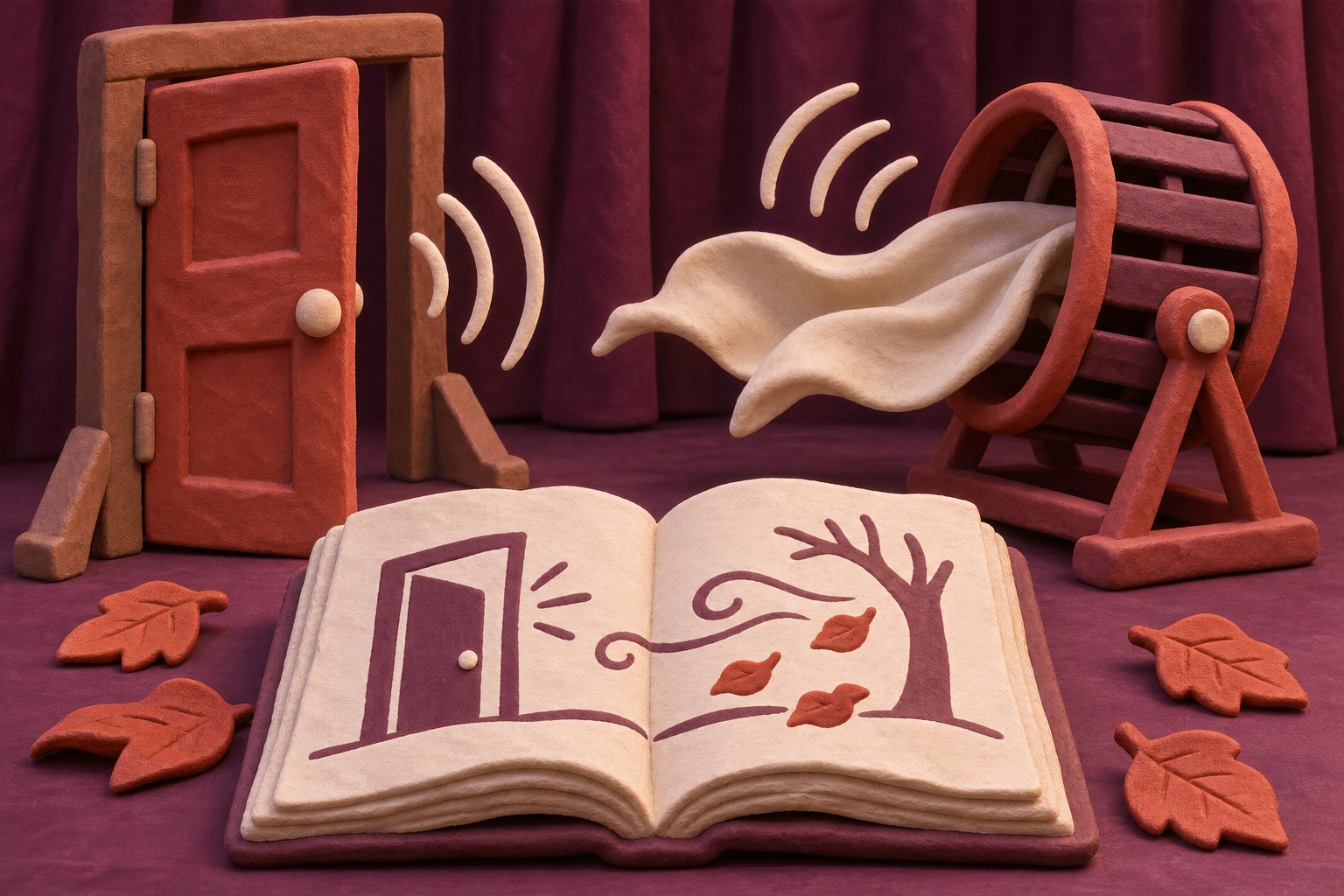
Sightless Cinema's Belfast workshop is making sound the starting point for theatre, not a concession added after a visual production is designed. That is its strongest idea: blind and partially sighted performers are building characters, settings and stories through audio, props and improvisation rather than being asked to fit a stage culture organised around sight.
BBC News reported that the workshop is part of a two-year project by Sightless Cinema. Participants use a wind machine, a miniature foley door, gravel, leaves and other materials to make the sounds that carry a developing play about a jilted bride and a chaotic household. The planned culmination is a 2028 performance at Queen's University Belfast's SARC Sonic Lab, where the audience will be blindfolded.
The method matters because it treats sound as a creative language in its own right. Participants must listen for cues and construct scenes in the audience's imagination; that can open forms of performance that conventional staging often sidelines. Helen Kennedy told the BBC that some amateur drama groups had been reluctant to include her because of fears that she could fall off stage. Her account points to an access failure in mainstream theatre, rather than a lack of artistic interest or ability.
The workshop should not be used as an excuse for established drama groups to leave their own barriers untouched. An audio-first project can create an important space, but it cannot substitute for safer, more inclusive rehearsal and performance practices across the sector. The BBC report includes no response from mainstream clubs or evidence of wider changes to their access arrangements.
Still, Sightless Cinema offers a practical challenge to the assumption that accessibility only means adapting a finished visual format. By making sound central from the outset, the project gives participants control over how a stage world is made. Its 2028 performance remains a plan, but the workshop already shows why access can be a source of artistic method rather than an afterthought.
Sources
- BBC UK · Source date: 2026-11-11
Independent editorial content. WUA is not affiliated with any political party. 2026-11-11