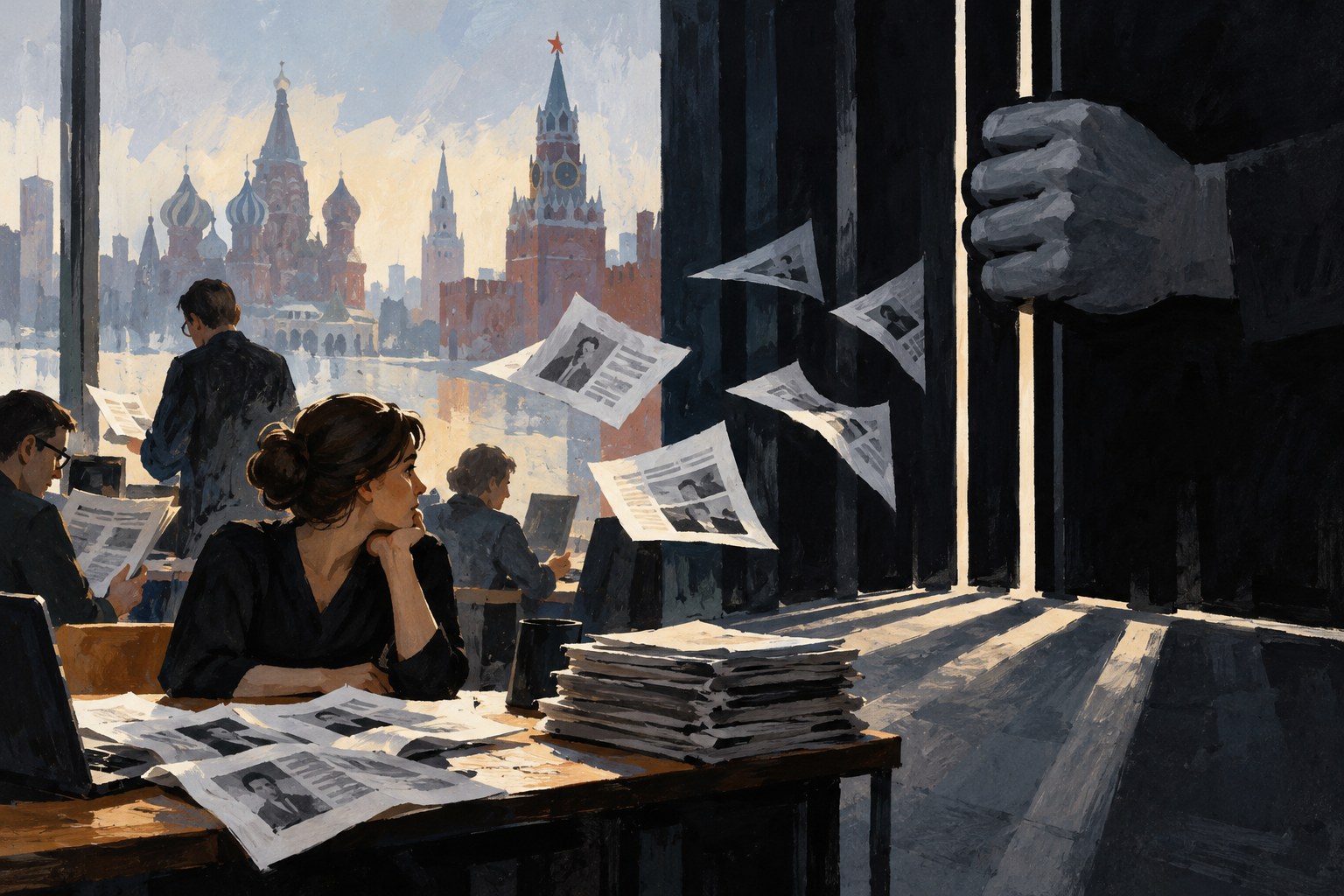
The planned closure of Novaya Gazeta in Russia is more than the end of one newspaper. It shows how a critical outlet can be pushed out of public life through successive forms of pressure. European governments should not treat that information shutdown as merely a domestic Russian matter: it removes independent channels for checking reporting on war, society and power.
On 30 October, editor-in-chief Sergei Sokolov said the paper would leave its Moscow premises and switch off its servers on 9 November. The newspaper would then no longer exist. Novaya Gazeta says this followed a one-month order to vacate its newsroom, the shutdown of its reader-donation system, a search of Sokolov's home and his temporary detention.
Those are reported facts or circumstances described by the outlet, not proof by themselves of who ordered each step. But they sit alongside previously documented measures. A Moscow court revoked the paper's print licence in 2022. Sokolov says the whole newsroom was designated a “foreign agent” in September this year. An investigation is also under way against corruption reporter Oleg Roldugin, who is accused of illegally collecting and disseminating personal data; Tagesschau reports that he could face up to six years in prison.
The strongest caution is that the material available does not include a full response from Russian authorities or complete documentation for each legal procedure. It would therefore be unsound to claim that every action came from one centrally issued instruction. Even so, the editorial judgment is warranted: when licence withdrawal, labelling, investigations, financial disruption and loss of premises converge on a critical outlet, the formal existence of individual procedures is not persuasive evidence of a free press.
Tagesschau reports that Novaya Gazeta Europe, founded in Riga in 2022, will remain. The concrete question now is whether it can retain access to sources and readers inside Russia, and whether authorities accompany the 9 November closure with further restrictions.
Sources
- Tagesschau · Source date: 2026-10-30
- Deutsche Welle · Source date: 2026-10-30
- Der Spiegel · Source date: 2026-10-30
Independent editorial content. WUA is not affiliated with any political party. 2026-10-30