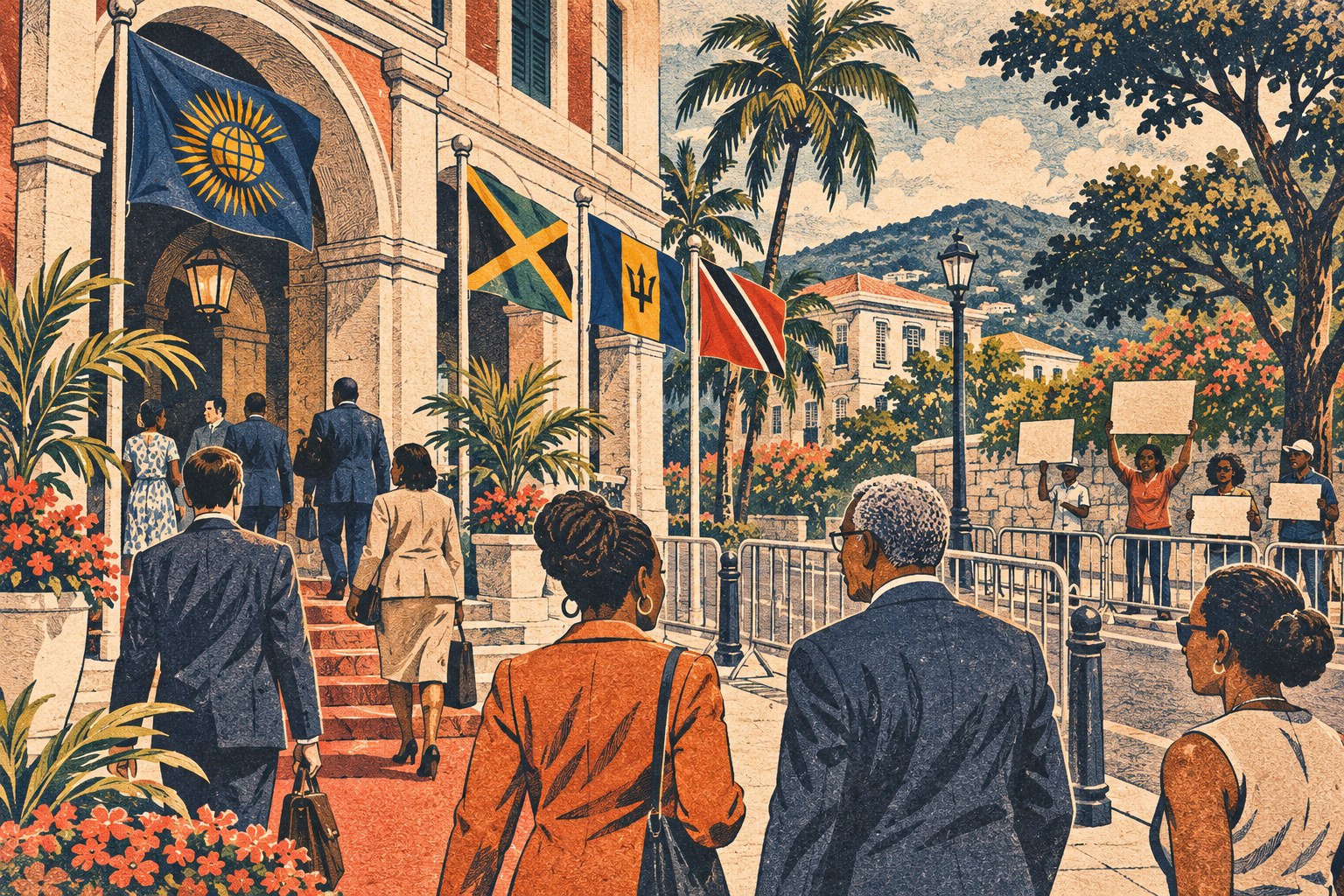
King Charles’s Commonwealth summit speech moved Britain’s language on the slave trade, but it did not move Britain’s responsibilities into a form that can be tested.
Opening the meeting in Antigua and Barbuda on 3 November, the King called the transatlantic trade in enslaved people a “shameful chapter”, said it filled him with horror and profound personal sorrow, and said he wanted modern partnerships capable of addressing past wrongs. That is a direct moral acknowledgement from the head of the Commonwealth, reported by the Guardian and echoed in a BBC report.
But the distinction matters. Charles did not offer a formal apology, endorse reparations or set out a process by which Britain would consider either. Instead, he pointed to education, employment, trade and climate resilience as ways to tackle continuing disadvantage. Those may be worthwhile policies, but they are not themselves an answer to the demand made by Caribbean leaders: whether Britain accepts institutional responsibility for the long-term effects of slavery and colonialism.
The gap was visible around the summit. Antigua and Barbuda’s prime minister, Gaston Browne, called for honest engagement with shared history. Caricom chair Philip J Pierre said an apology was an essential first step, but that “an apology without repair is incomplete”. Campaigners likewise argued that debt relief or aid should not simply be relabelled as reparations.
There is a serious counterargument. The King is constitutionally politically neutral, and a palace spokesperson said it would not be appropriate for him to announce a change in government policy. Reparations also raise unresolved questions about who is responsible, who should benefit and what remedy would be workable. Condemnation and dialogue may therefore be presented as a credible starting point.
Yet that defence also explains the limit of the speech. Personal sorrow can deepen recognition, but it cannot settle a state question by itself. The reported opening for UK-Caribbean dialogue now needs a clearer test: whether ministers will define what an apology would mean, and whether talks can examine reparatory proposals rather than only the language of regret.
Sources
- The Guardian · UK · Source date: 2026-11-03
- BBC UK · Source date: 2026-11-03
Independent editorial content. WUA is not affiliated with any political party. 2026-11-03