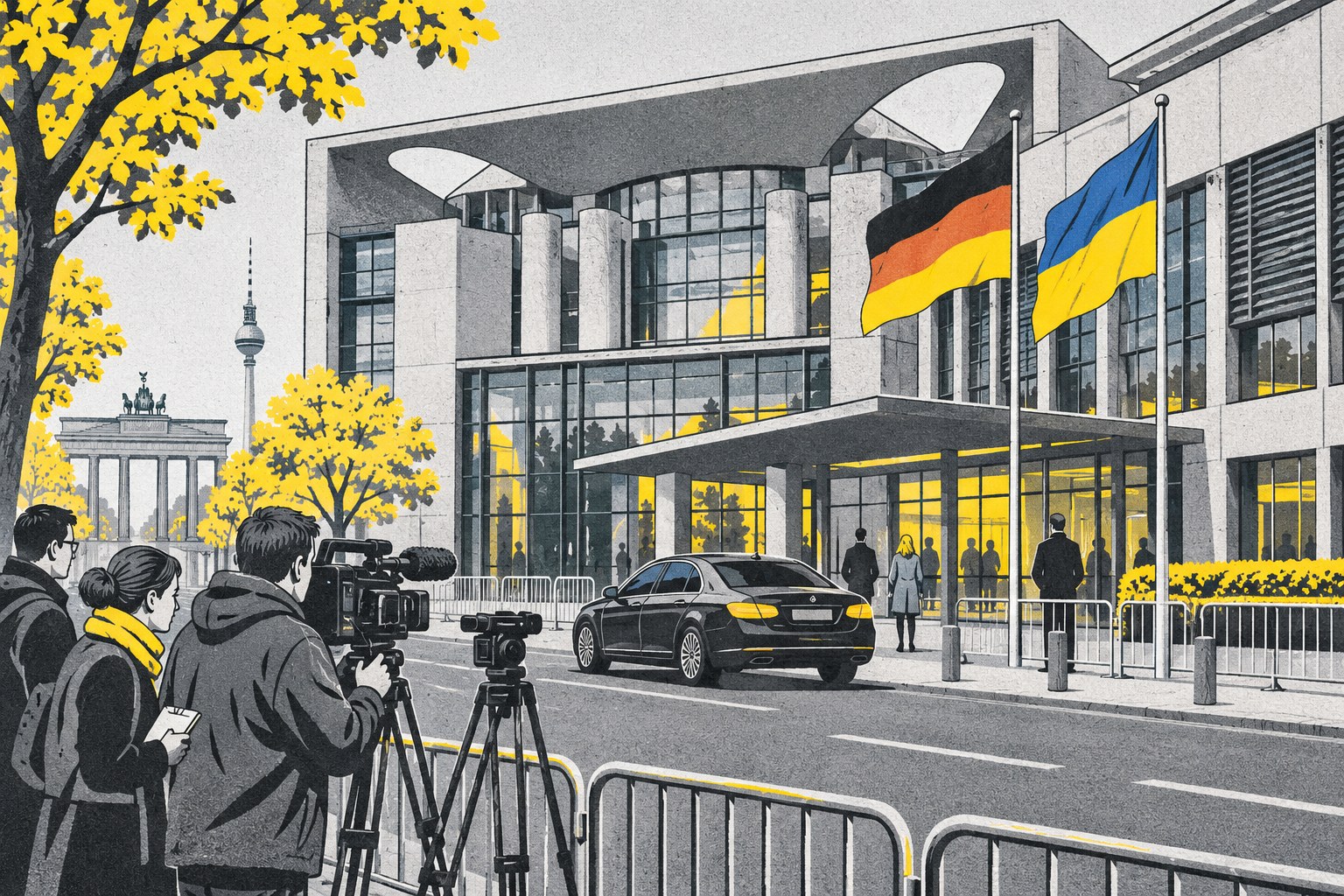
Zelenskyy in Berlin showed what Germany is trying to secure before the next Ukraine talks: continued support for Ukraine and a European voice in decisions that would shape Europe’s own security. Chancellor Friedrich Merz’s commitments matter politically, but the available reporting does not show that Berlin can determine either the negotiations or the course of the war.
At their November 3 meeting, Merz promised Ukrainian President Volodymyr Zelenskyy further support ahead of winter. Tagesschau, citing dpa, reported that additional winter assistance could total 200 million euros, split between the Foreign Office budget and development policy funding. Merz also said Germany would continue helping until the war ends. The supplied reports do not establish when or how that funding will be disbursed, so it should not be treated as money already delivered.
The timing gives the visit its force. According to reported US statements, representatives of Ukraine, Russia and the United States are due to meet in Abu Dhabi on November 10 and 11. The reported agenda includes post-war security arrangements, de-escalation, humanitarian measures and further steps toward peace. Zelenskyy identified a halt to attacks on energy infrastructure, Black Sea grain transport and prisoner exchanges among Ukraine’s priorities.
Merz and Zelenskyy both argued that Europe must be involved. That is a practical claim, not simply a demand for visibility: sanctions and a future European security architecture cannot be settled durably without European states. Yet the strongest limitation remains. The reporting does not establish Russian readiness for a ceasefire, nor does it show that Europe will have a seat at the Abu Dhabi talks. Merz himself said he still saw no serious Russian willingness to negotiate.
Zelenskyy in Berlin was therefore a firm statement of political intent, not proof of new leverage. Merz plans to host the Coalition of the Willing in Berlin on November 19, with support for 2027 also expected to be discussed. The test is whether this produces verifiable commitments and a European role that the negotiating parties actually accept.
Sources
- Tagesschau · Source date: 2026-11-03
- Tagesschau · Source date: 2026-11-03
- Deutsche Welle · Source date: 2026-11-03
Independent editorial content. WUA is not affiliated with any political party. 2026-11-04