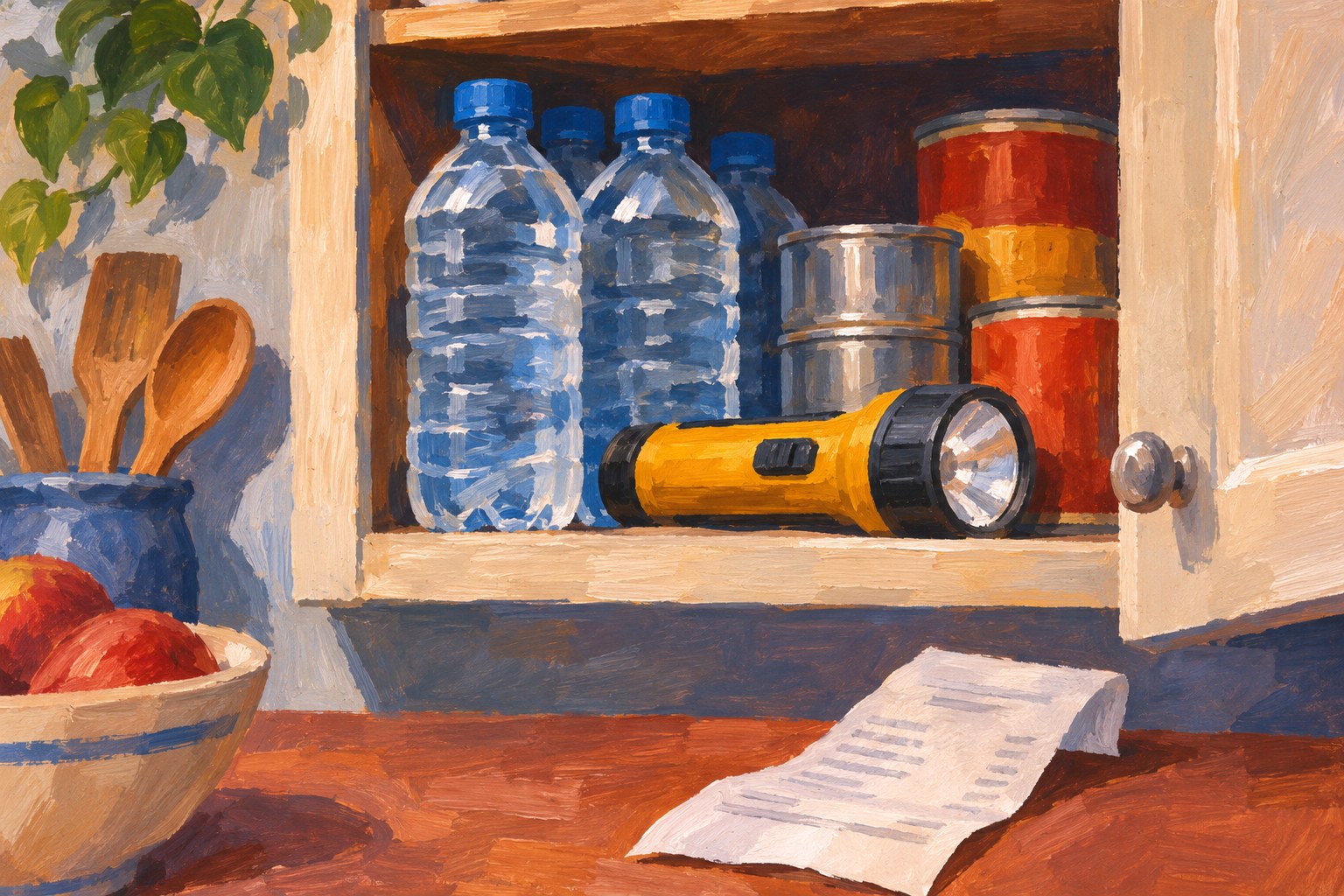
The Be Ready campaign appears to have changed what some people put in their weekly shop, but the retail figures do not support calling the response panic buying. That distinction matters: a government asking households to prepare for disruption should want measured participation, not a rush that empties shelves.
The Guardian reported that, in the 10 days after the campaign launched, sales of bottled water were 67% higher than in the same period a year earlier. Tinned and jarred goods rose 37%, while hand sanitiser sales rose 83%. The campaign encourages households to prepare for up to three days if essential services are disrupted by events such as extreme weather or cyber-attacks.
Those increases are striking, but the pattern is more restrained than the word “stockpiling” suggests. Fraser McKevitt of Worldpanel by Numerator said growth came from more shoppers adding recommended goods to ordinary purchases, rather than from people filling trolleys unusually high. Less than a third of households bought bottled water in October, according to his reading of the data. The report also said the typical tinned-meat purchase remained about 500g, even as the number of daily buyers increased.
There is a reason not to dismiss concern altogether. Separate Barclays research, reported by the Guardian, found that 27% of people were stockpiling or considering building up food and drink supplies. Yet that finding describes a broader appetite for reserves, not evidence that the campaign triggered a run on shops.
The early result therefore looks like a limited communication success: more households may be considering basic contingency supplies without disrupting normal retail behaviour. But sales are only a proxy for resilience. The supplied reporting does not set out the campaign's full checklist, reach, budget or whether purchases leave households prepared for three days. Ministers should publish those measures before presenting higher sales as proof that Britain is materially better prepared.
Sources
- The Guardian · UK · Source date: 2026-11-10
Independent editorial content. WUA is not affiliated with any political party. 2026-11-10