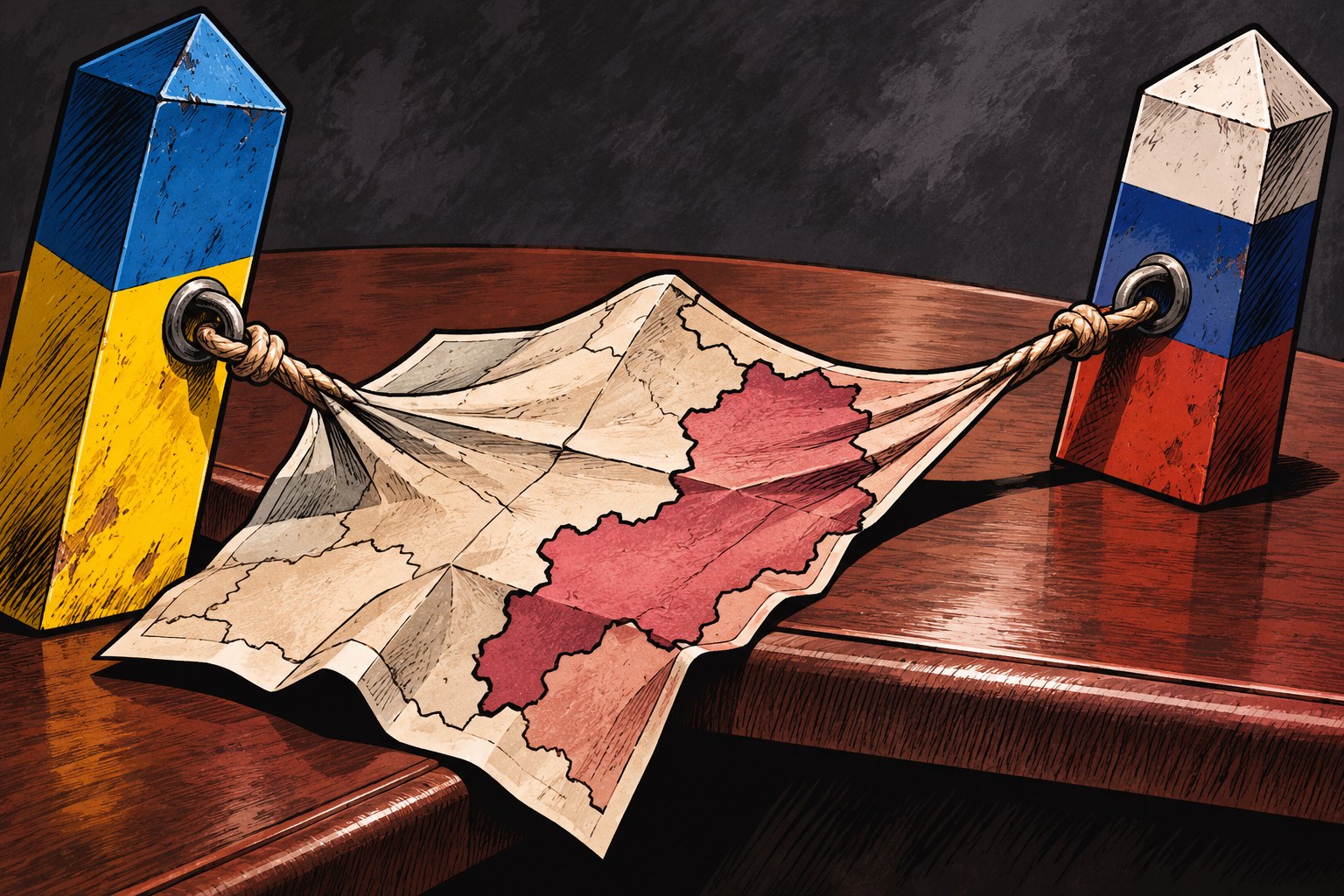
White House envoys reportedly developed a concept to redraw the borders of Ukraine’s Donetsk and Luhansk regions before trilateral talks with Russia and Ukraine in Abu Dhabi. Its political logic, as described by Polsat News citing The Economist, was stark: Ukraine would retain some land while Russia could tell its domestic audience that it had won Donbas. Kyiv reportedly rejected the proposal in full.
That is not a technical detail of peace diplomacy. It reaches the central question of sovereignty. If the proposal was put forward as described, it would have involved Ukraine giving up areas Russia has not captured since the full-scale invasion began in February 2022. Polsat reported that the concept concerned redrawing the two eastern regions’ borders and was meant to allow Moscow to “save face”.
Calling that a compromise risks obscuring the basic reality: Russia launched the war against Ukraine. Designing borders around Russia’s need to claim a political victory would offer the aggressor more than territory. It would also turn the public presentation of its war aims into a negotiating objective.
There is a serious argument for testing difficult formulas to end the war. Talks are intended to reduce and ultimately stop the fighting, and no viable settlement will be easy. But that does not make a durable peace more likely if it rests on treating coerced border changes as a vehicle for preserving the attacking state’s prestige.
The supplied report does not include the proposal’s text or map, a formal US statement, or a Russian response. The account of Kyiv’s full rejection is attributed to The Telegraph. What is clear from the report is that trilateral talks began in Abu Dhabi on Tuesday. If territorial borders are genuinely on the table, they cannot be reduced to a cartographic bargain: they determine whether negotiations limit the consequences of war or entrench its gains.
Sources
- Polsat News · Source date: 2026-11-11
Independent editorial content. WUA is not affiliated with any political party. 2026-11-11
Abu Dhabi Ukraine talks: Europe needs a seat in its own security debate