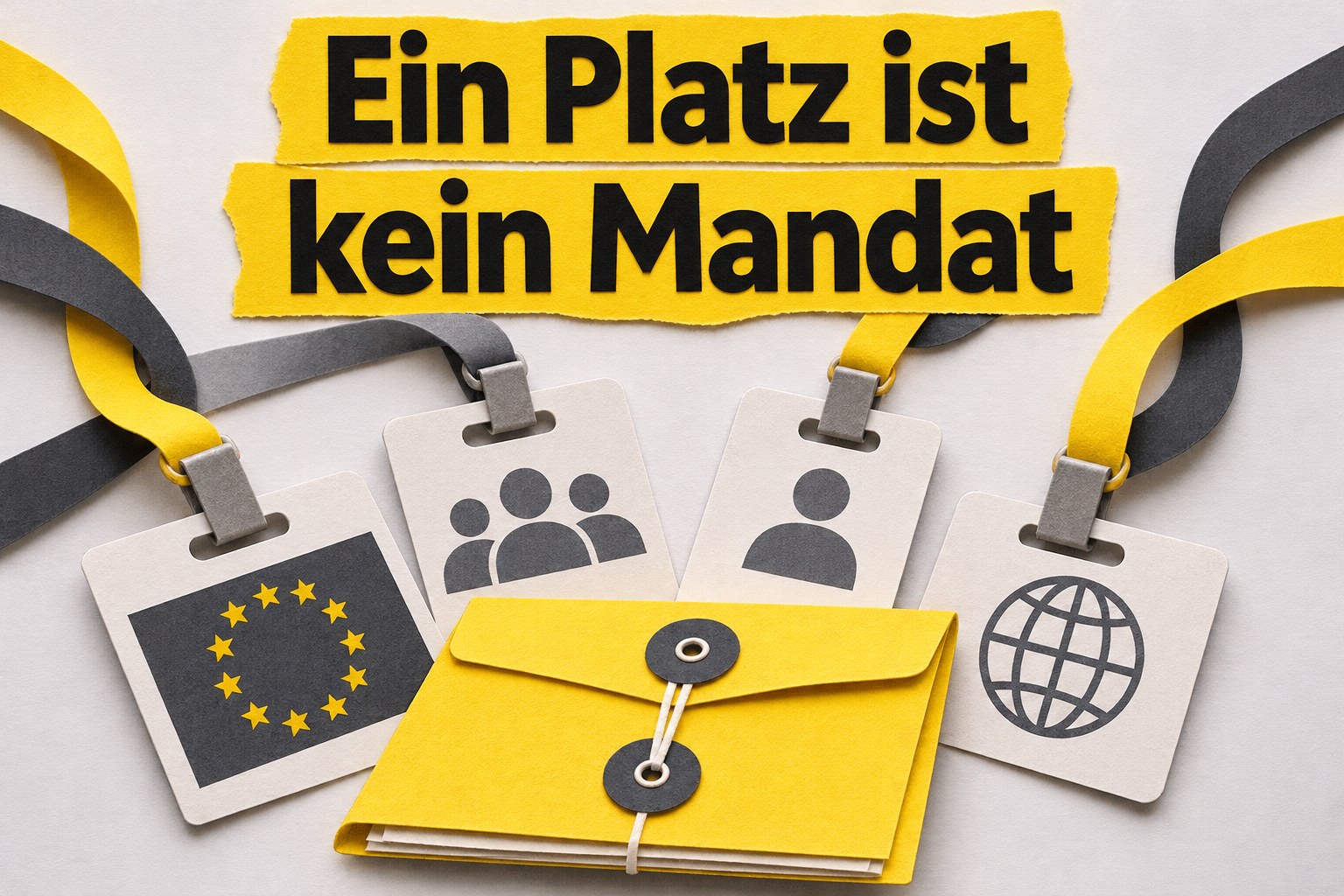
Steve Witkoff said European representatives would join the next Ukraine-Russia meeting after his meeting with Vladimir Putin. That is a concrete expansion beyond the recent trilateral contacts. It does not, however, answer the central operational question: under what shared mandate would Europe speak?
Der Spiegel reported that Ukrainian and Russian delegations held direct talks in Abu Dhabi on Tuesday and Wednesday under US mediation. Representatives of Germany, France, the United Kingdom and Italy were present on the margins, but did not meet Russian representatives directly. Witkoff’s statement would broaden Europe’s role at the next meeting, for which the report gives no date or venue.
The dispute over representation has now become explicit. Jared Kushner said Europe should identify one person able to speak in its name. The point is practical, not ceremonial: the presence of several national, EU and NATO representatives does not itself create a common position on security, finance or economic matters.
The strongest counterargument is that a single European negotiator could obscure, rather than resolve, different national interests and institutional responsibilities. According to Der Spiegel, Italian Prime Minister Giorgia Meloni called for a binding decision on representation and mandate. European Council President António Costa instead argued for continued work through different formats, while German Chancellor Friedrich Merz opposes appointing a special representative.
That plurality need not exclude Europe from the talks. But Witkoff’s invitation does not yet create a European negotiating counterpart with clear authority. Who speaks at the next round, whom that person is authorised to represent and what position they can advance will determine whether European participation amounts to more than a seat at the table.
Sources
- Der Spiegel · Source date: 2026-11-12
Independent editorial content. WUA is not affiliated with any political party. 2026-11-12