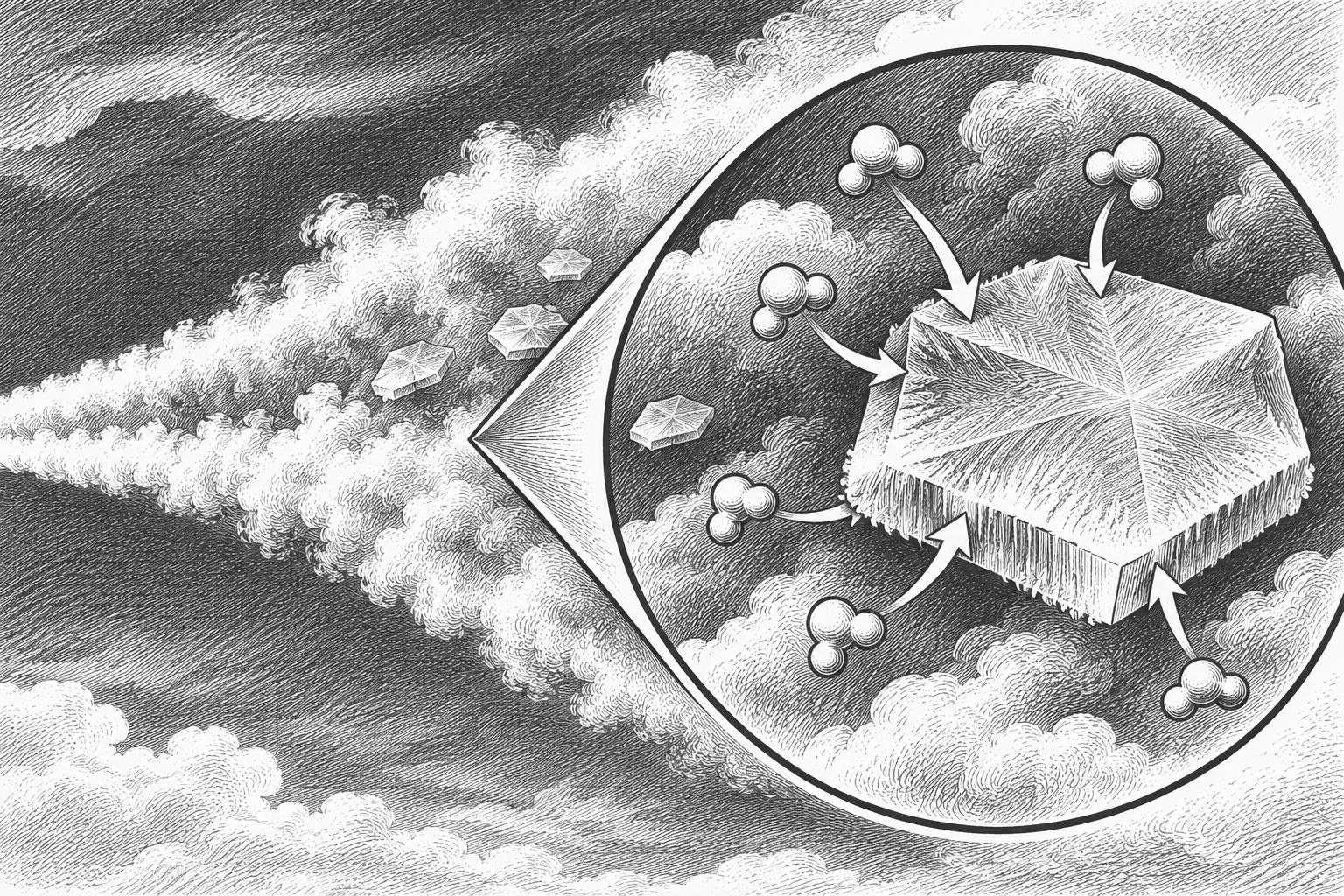
An aircraft contrail can linger for hours if the air at cruising altitude is humid enough. In dry air, the ice crystals that make the white line visible quickly turn back into water vapour, and the trail disappears. In humid air, the line can stay narrow long after the aircraft has gone.
Meteorologist Delia Gutiérrez Rubio explained the difference in “Estelas de condensación: las nubes que señalan el rastro de los aviones,” published by Spain’s state weather agency, AEMET, on 15 March 2017. At cruising altitude, engine exhaust mixes with cold air. If the mixture reaches saturation, water vapour from the exhaust condenses and freezes. The white streak seen from the ground is a cloud of ice.
Once the cloud forms, how long it lasts is a different question from how wide it gets. When the surrounding air is close to saturation, water vapour from that air can settle onto the crystals as ice. A thin streak can then broaden, and turbulence can give it ragged edges. A contrail that stays visible for hours need not have grown wider at all. Explaining a particular trail would require weather observations at the time and altitude of the flight.
Source: https://aemetblog.es/2017/03/15/estelas-de-condensacion-las-nubes-que-senalan-el-rastro-de-los-aviones/
Sources
Independent editorial content. WUA is not affiliated with any political party. 2026-11-25