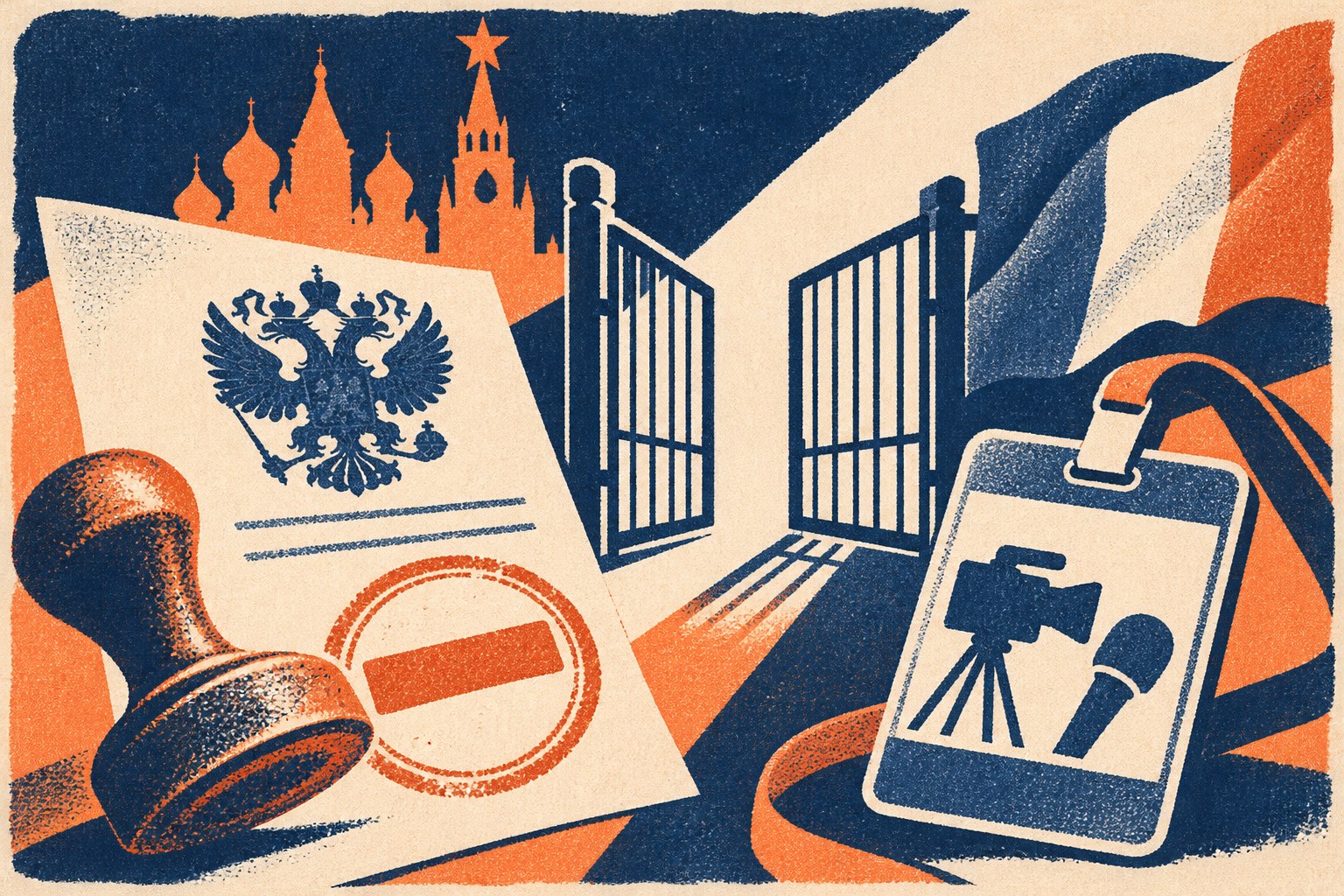
Russia announced on 11 November that it was barring two French lawmakers, Sacha Houlié and Arthur Delaporte, and two journalists, Ariane Chemin and Paul Gogo, from entering the country. Moscow has presented the move as a response to France’s late-July expulsion of pro-Kremlin commentator Xenia Fedorova.
The important feature is the targeted nature of the response. Rather than addressing Paris in general terms, Russia has named two elected representatives and two media professionals. That turns a diplomatic dispute surrounding Fedorova into a direct travel restriction on people involved in French public life.
According to Franceinfo, Moscow said the decision was taken because of the four people’s alleged “participation in the harassment” of Fedorova. That is the Russian authorities’ allegation. The supplied reporting does not set out the conduct cited, the legal basis for the ban, or its duration. It also contains no response from the French government or the four people named.
Both supplied reports link Russia’s announcement to Fedorova’s expulsion from France at the end of July. Moscow’s stated connection makes the measure a claimed act of retaliation; it does not establish the allegation made against the four French figures.
This is therefore a focused diplomatic escalation, not a general statement of friction between Paris and Moscow. Its immediate significance lies in the choice to make journalists and elected officials individually named targets in a state-to-state dispute.
Sources
- Libération Actualités · Source date: 2026-11-11
- franceinfo Tous titres · Source date: 2026-11-11
Independent editorial content. WUA is not affiliated with any political party. 2026-11-11