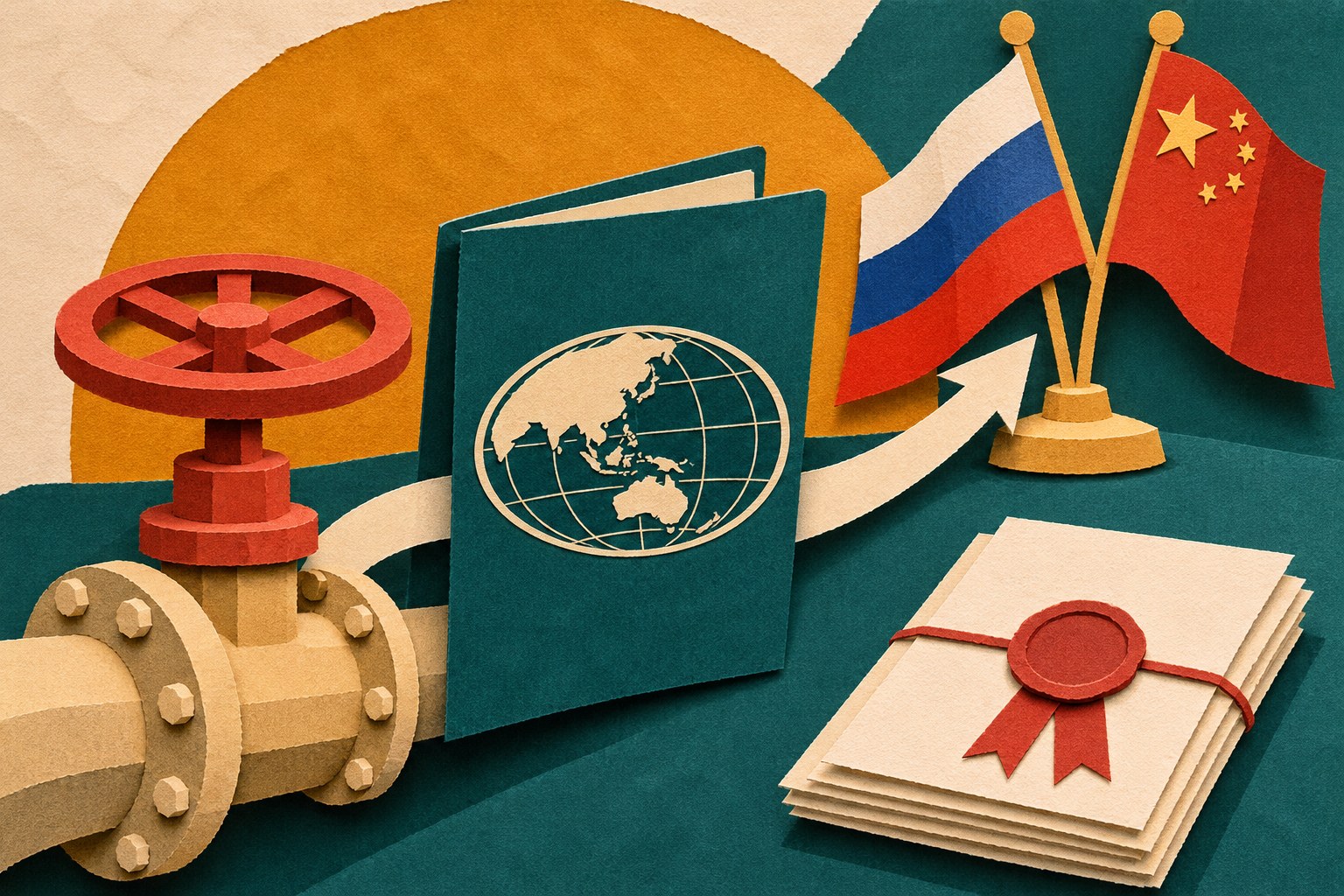
Putin used an APEC-related appearance in Shenzhen to join two arguments that serve the same political purpose: criticism of Europe’s sanctions policy and a case for a tighter Russia-China role in world affairs.
According to ANSA, citing Tass for part of the remarks, the Russian president said Russia had Europe’s largest economy and that Western sanctions were imposing costs on the countries that adopted them. He also argued that the European Union had failed to adjust to the loss of the Russian market and low-cost Russian energy.
Those are Putin’s assertions, not economic findings established by the material available here. ANSA’s reports provide neither the measure nor the comparison period behind the claim about Russia’s economic size. They also provide no data supporting his assessment of the sanctions’ effects on Europe or the EU’s capacity to adapt. That distinction matters because the speech presents contested economic consequences as evidence for a geopolitical conclusion.
In the same setting, Putin said Moscow and Beijing were pursuing a constructive approach to building a fairer multipolar world order. Xi Jinping, according to ANSA, said China-Russia ties contribute to global stability, described the relationship as solid, and said it was not shaped by short-term international conditions.
The significance of the Shenzhen remarks lies less in a newly documented economic result than in their construction. Putin placed Europe’s energy and sanctions difficulties beside Russia’s partnership with China, presenting the latter as an alternative source of international weight. It is a coherent diplomatic message, but the available reporting does not supply the evidence needed to settle the economic claims on which part of that message rests.
Sources
- ANSA · Top news · Source date: 2026-11-18
- ANSA · Top news · Source date: 2026-11-18
Independent editorial content. WUA is not affiliated with any political party. 2026-11-18