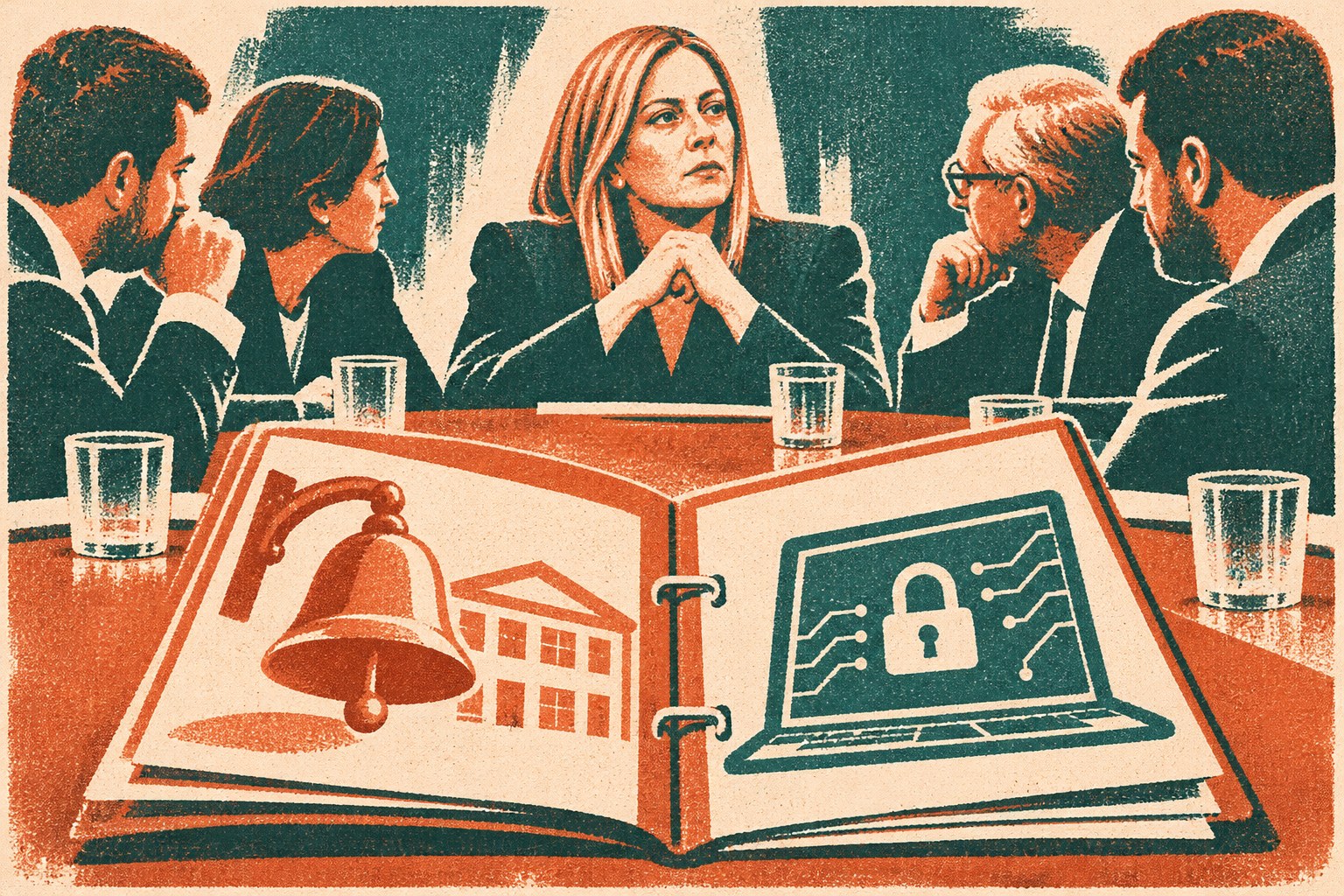
Giorgia Meloni brought opposition leaders and deputy prime ministers Antonio Tajani and Matteo Salvini to Palazzo Chigi on 12 November to discuss recent alerts and reports, including alleged explosive devices in schools and activity described as hacker-related. The meeting moves the response beyond checks at individual schools into a national political coordination effort, centred on sharing the information available.
ANSA reported that opposition leaders arrived for the meeting with the prime minister. Its stated purpose was to review the complex picture of recent alerts and reports, including those connected to hacker activity. Alleged explosive devices in schools were also on the agenda.
That wider consultation is a sensible step. Following evacuations and checks before schools reopened on 12 November, involving the opposition can help keep school safety and continuity from becoming an immediate partisan contest. Its practical value, however, will depend on whether the discussion produces clear guidance for schools, families and public authorities.
The meeting does not establish who sent the reports, or that the school alerts and hacker-related activity stem from the same source. ANSA says hacker activity was among the issues discussed, but the supplied reporting provides no technical evidence, attribution or stated link to the school reports.
Nor do the available sources describe decisions, new national procedures or a timetable for action. The immediate development is the political coordination itself. Any assessment of the government response should rest on the concrete measures Palazzo Chigi or the participants set out after the meeting.
Sources
- ANSA · Top news · Source date: 2026-11-12
- ANSA · Top news · Source date: 2026-11-12
Independent editorial content. WUA is not affiliated with any political party. 2026-11-12
Italy school bomb-threat emails: why schools are reopening after checks