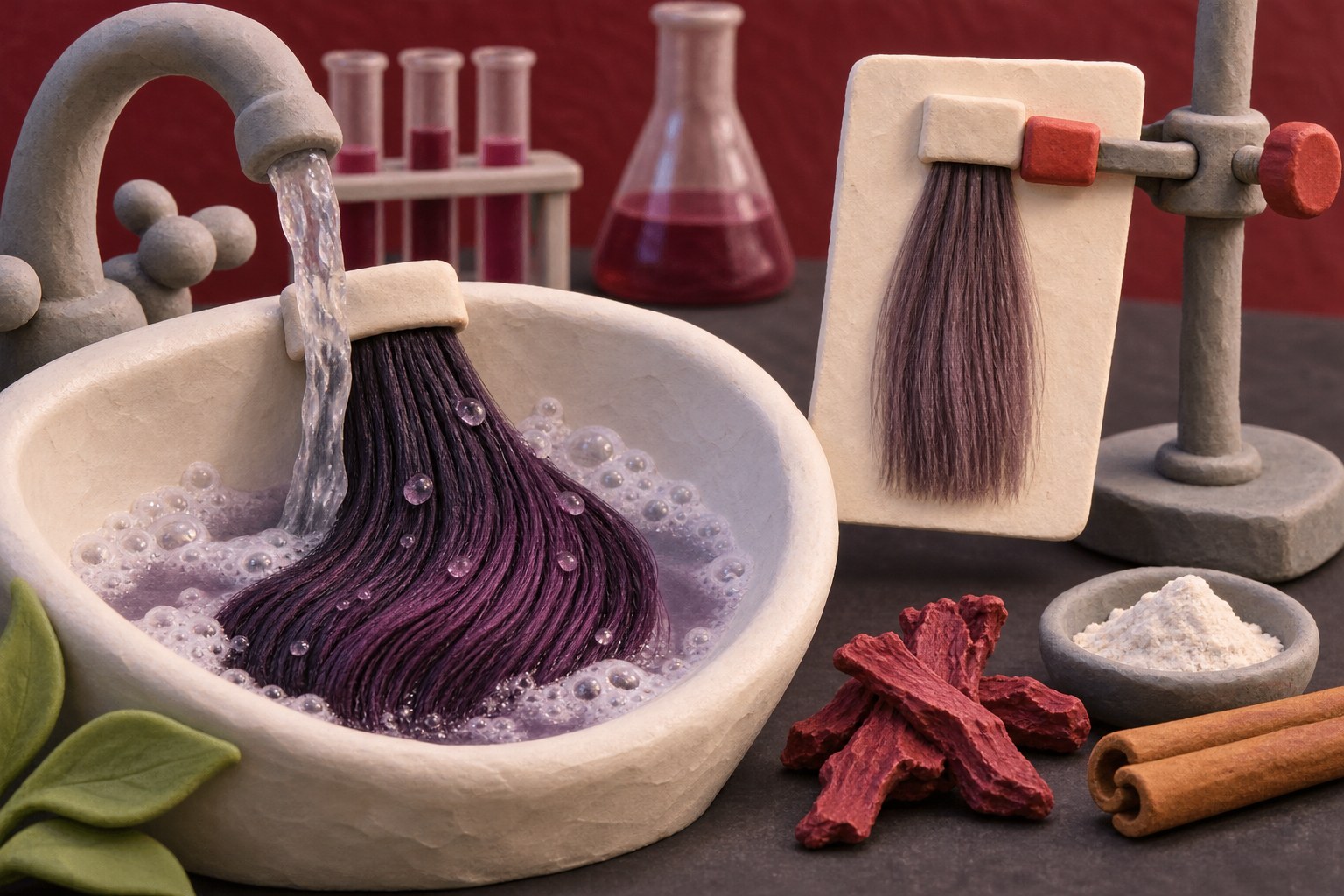
A plant-based hair dye made with alizarin, zinc ions and cinnamaldehyde retained about 80% of its black-purple colour after 30 washes in reported hair-sample tests, compared with 68% for a commercial dye. The result is an early materials-development finding, while the team works toward commercialisation.
Nauka w Polsce reported that researchers at the Shanghai Institute of Technology combined alizarin, a pigment associated with madder root, with zinc ions and added cinnamaldehyde, the main flavour component of cinnamon. The formulation produced a cinnamon scent as well as the black-purple shade.
The report said dyed hair had lower levels of three microorganisms thought to be linked to dandruff. That observation concerns tested hair samples; it does not establish that the dye prevents or treats dandruff or scalp disease in people.
Researchers also tested the pigment on human skin cells, zebrafish cells, sprouting beans and mice. In a 14-day mouse study, the report said the animals' fur retained its colour and their skin showed no change. Those tests provide preclinical signals, but the supplied reporting contains no human clinical trial, long-term allergy data or results from routine use on human scalps.
The study therefore offers a specific lead for durable plant-based hair colour, rather than a basis for consumer safety or anti-dandruff claims. Nauka w Polsce reported that the researchers are pursuing commercialisation, without giving a launch timetable, price or regulatory pathway.
Sources
- Nauka w Polsce · Fundacja PAP — Źródło: Nauka w Polsce (Fundacja PAP) (https://naukawpolsce.pl/) · Source date: 2026-11-09
Independent editorial content. WUA is not affiliated with any political party. 2026-11-09