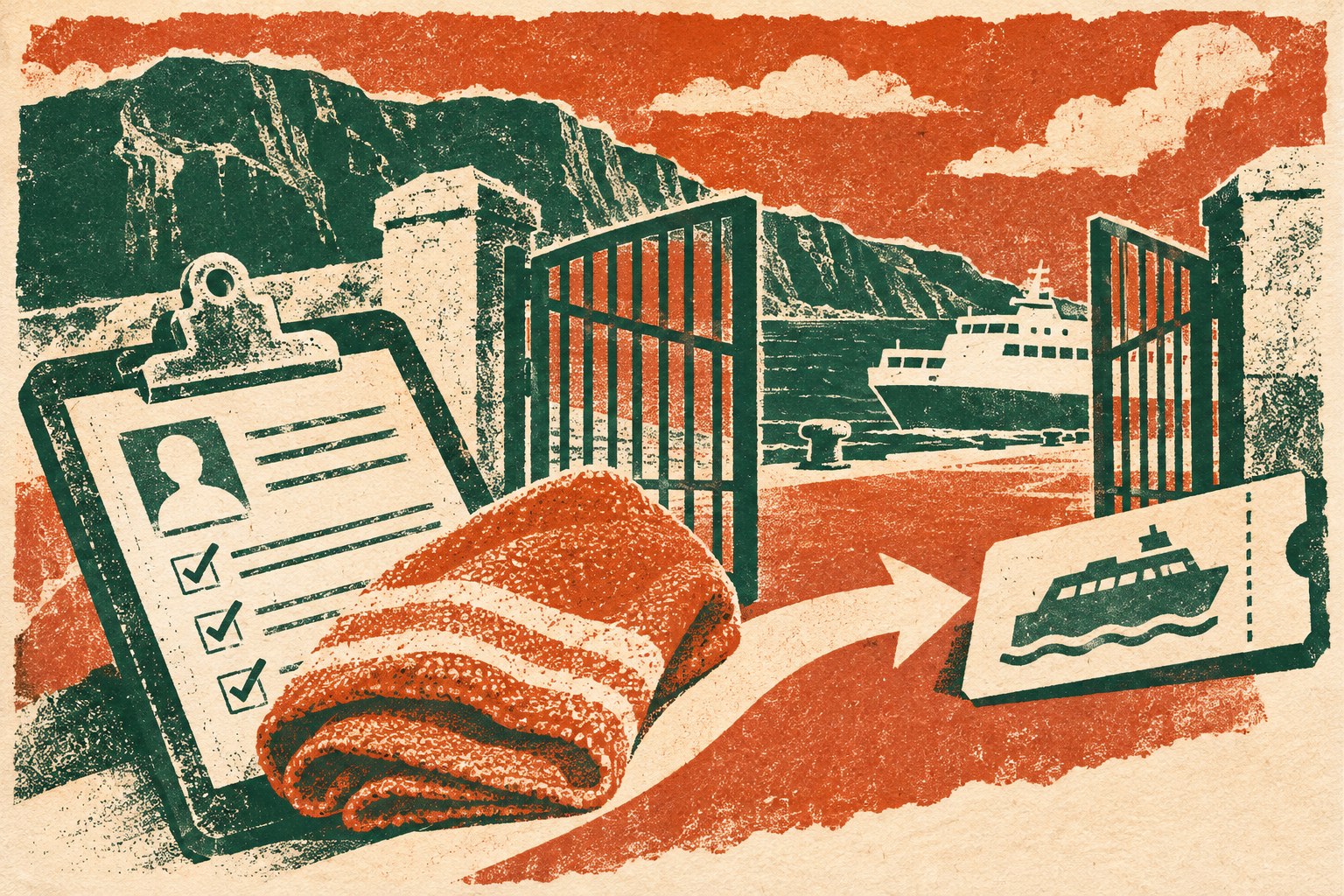
More than 2,000 people arrived by boat in the Canary Islands within 48 hours, with most vessels reaching El Hierro. For an island with about 12,000 residents, that is not an abstract policy pressure. It creates immediate demand for reception, registration, food, water, shelter and organised onward transfers.
Spain declared a migration emergency for the archipelago this week, citing an increase in arrivals in recent weeks. The declaration will matter only if it produces usable capacity. An administrative label does not by itself provide accommodation, medical staff, protection for vulnerable people or transport to other services.
Digi24 reported, citing the rescue service, that 1,324 people aboard 14 inflatable boats received assistance, most of them on El Hierro. The Red Cross meets arrivals at the port with dry clothing, food, water and registration, its Tenerife emergency coordinator told public broadcaster RTVE. That points to the immediate issue: first reception must work before wider migration-policy arguments can be meaningfully addressed.
The government can reasonably argue that the emergency declaration is the tool needed to coordinate that response. But the available report does not set out what extra resources the measure provides, how long it will run or how responsibilities will be divided between authorities. The relevant test is therefore not the title of the emergency, but whether it quickly expands reception and transfer capacity.
The Atlantic route from West Africa to the Canary Islands remains dangerous, and a concentrated arrival on a small island requires an orderly as well as humane response. Until Spain details the operational measures, the administration should be assessed by the services it makes available in practice, rather than by the declaration alone.
Sources
- Digi24 · Source date: 2026-11-15
Independent editorial content. WUA is not affiliated with any political party. 2026-11-15