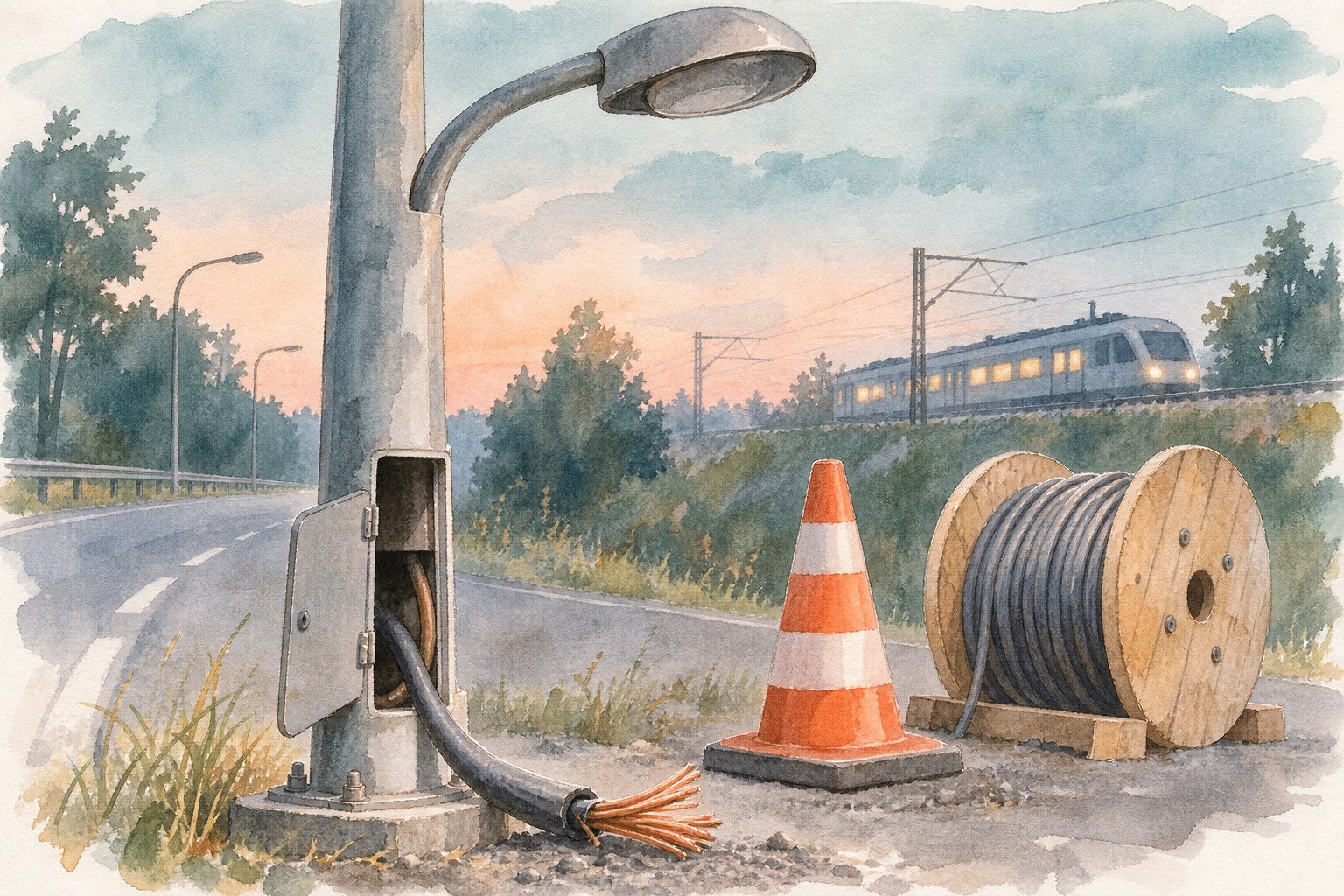
Copper theft is no longer only a loss of metal. When cables disappear from road lighting and railway work, the cost moves into repairs, operations and road safety. That is why Trafikverket should show where damage occurs and whether material substitution and surveillance are reducing the disruption.
DN reports that the copper price rose 30% in one year. The same report describes six people remanded in custody in Bordeaux on suspicion of stealing 500 kilometres of copper cable from 13 solar installations. That is a major European example of cable theft, but it does not by itself explain why thefts are rising in Sweden.
The Swedish consequences are already tangible. According to DN, Trafikverket's western region has spent several million kronor over the past year restoring road lighting after thefts. Darkened lighting is more than a replacement-cable bill: it can reduce both perceived security and road safety.
On the rail network, 96 copper thefts were recorded through August this year, compared with 75 over the same period last year, DN reports. Trafikverket has begun replacing copper with cheaper aluminium, which is also easier to work with. Where technically suitable, that is a sensible way to make parts of the network less attractive to thieves.
But replacing a material is not a complete answer. DN reports that Swedish solar parks use fencing, cameras and infrared alarms, and that theft there mainly occurs during construction, when copper is easier to access. Exposure therefore varies by site and stage of work. A higher copper price may sharpen the incentive, but the available reporting does not establish it as the sole cause of Sweden's increase.
The practical test is clearer: which routes and facilities are restored fastest, which safeguards reduce attacks, and how much disruption is avoided? When theft extinguishes road lighting or interrupts railway maintenance, it is an infrastructure problem as well as a property crime.
Source: Dagens Nyheter.
Sources
- Dagens Nyheter · Source date: 2026-11-10
Independent editorial content. WUA is not affiliated with any political party. 2026-11-10