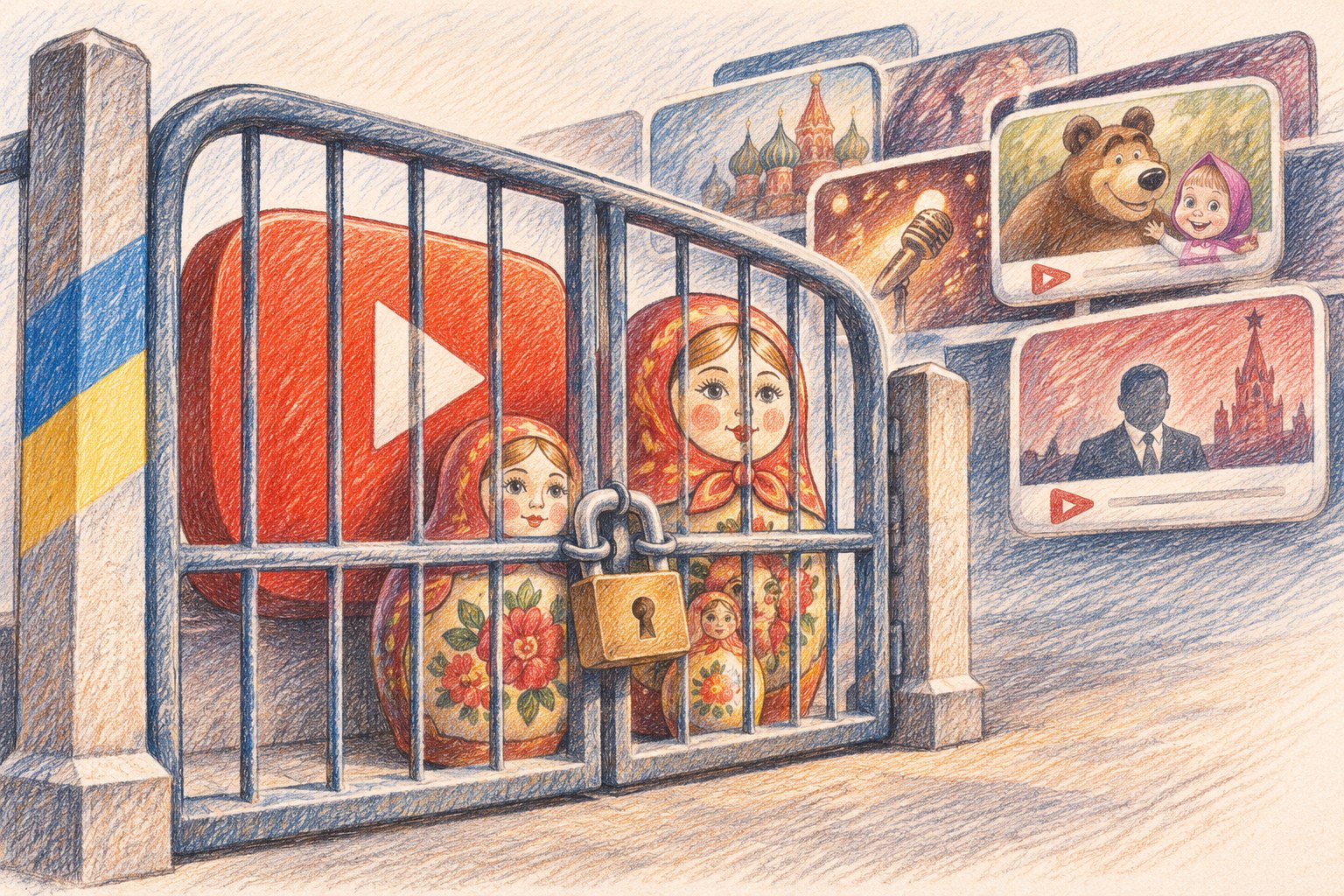
YouTube has blocked access in Ukraine to 16 Russian channels, according to Ukraine’s Center for Countering Disinformation (CCD). The reported measure matters because it combines accounts described as propaganda outlets with performers’ channels and foreign-language channels linked to the Russian animated series Masha and the Bear.
The CCD said the channels spread propaganda and supported Russia’s war against Ukraine. The supplied report names the military correspondent Alexander Sladkov and Z-blogger Serhii Koliasnykov, known as Zergulio, among those affected. It also lists channels associated with Nadiia Babkina, Yuliia Savicheva, Viktoriia Daineko, Masha Weber and Uma2rman, alongside the resources Russkie Skleiki SVO and Sevastopolskyi Korrespondent.
The inclusion of foreign-language Masha and the Bear channels makes this more than a removal of overt political commentary. It indicates a reported Ukraine-specific access restriction that reaches a broader Russian media ecosystem. That is a defensible response where authorities identify channels as vehicles for war-supporting propaganda, but the scope should be described accurately: the material supports a restriction in Ukraine, not a worldwide deletion of the channels.
The report also says YouTube blocked Russian-, Ukrainian- and English-language Masha and the Bear channels in Ukraine in August. The November announcement therefore appears to extend the reported action, rather than introduce the first restriction involving the series.
Neither YouTube’s reasoning for individual channels nor a full list of all 16 was included in the supplied material. It also gives no viewing figures or evidence about the effects on subscriptions, recommendations or embedded videos. Those limits do not erase the reported access change; they set its boundaries.
For now, the central development is practical and regional: viewers in Ukraine have reportedly lost access to another group of Russian channels. The policy question is not whether every restriction is identical, but whether platforms explain clearly how such country-level decisions are made and applied.
Sources
- Українська правда · Source date: 2026-11-14
Independent editorial content. WUA is not affiliated with any political party. 2026-11-14