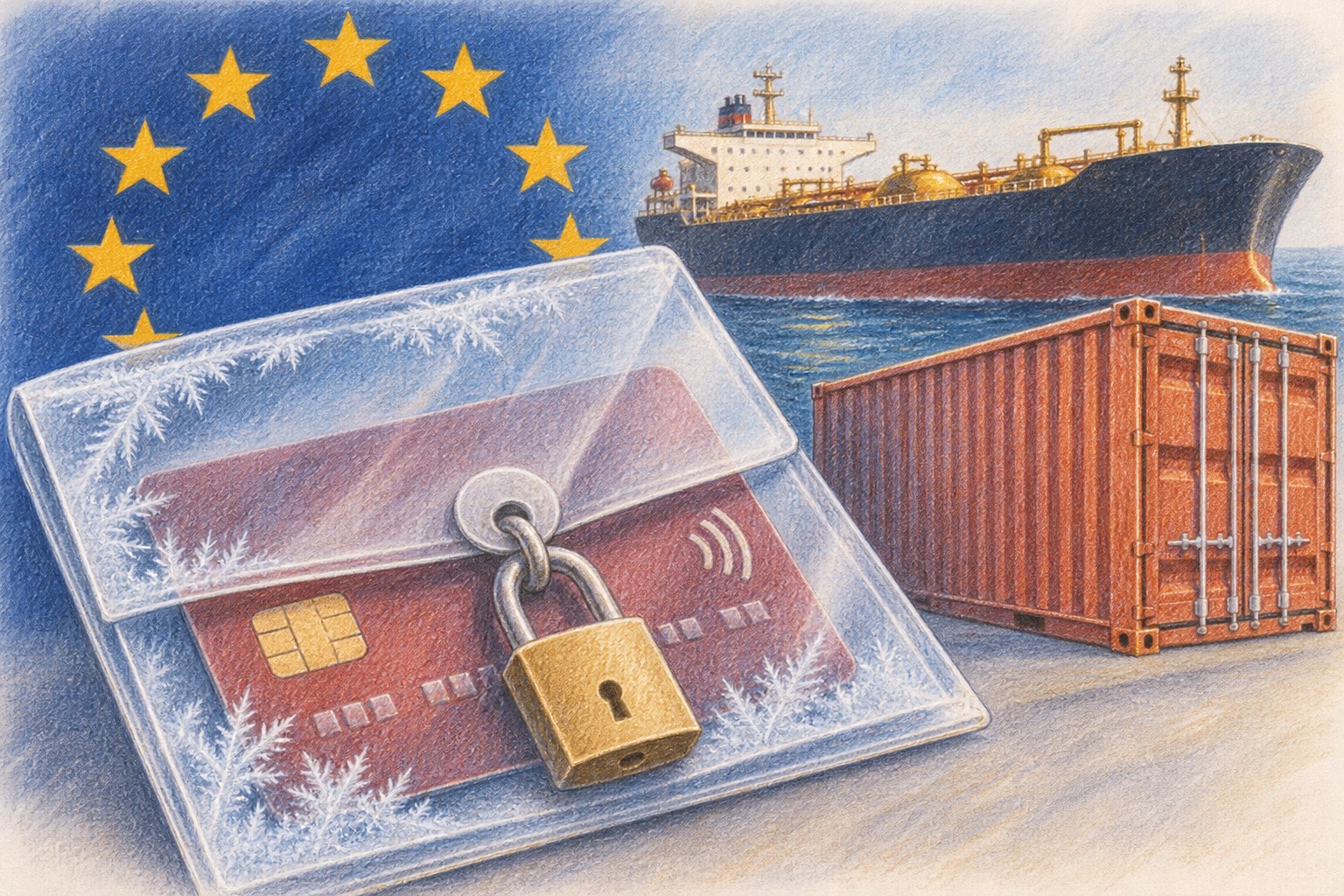
The EU Council on 16 November added 12 people and 101 Russian or third-country entities to its sanctions list. The key feature is not simply a longer list: the decision brings 49 financial institutions together with energy companies, shadow-fleet-linked businesses and online marketplaces in one measure.
According to Ukrainska Pravda, citing the Council of the EU and Council Decision 2026/2574, the assets in the EU of all 113 listed parties have been frozen. EU citizens and companies are prohibited from making funds or other economic resources available to them, directly or indirectly, and the 12 individuals are barred from entering the bloc.
The financial section covers 47 commercial banks and two non-bank credit organisations. The report names RFK-Bank, Timer Bank, YooMoney, Bank 131, Unistream, SPB Bank and Morskoy Bank among those listed. The Council said that a significant share of the institutions provide loan holidays to Russian soldiers fighting against Ukraine, participate in the digital-ruble pilot or hold FSB licences for cryptographic activity.
The list also includes 27 oil-refining, extraction and gas companies; 15 companies involved in owning, managing, financing or insuring shadow-fleet tankers; and the Wildberries and Ozon marketplaces. The EU regulation describes the marketplaces, according to the report, as supply networks selling military and dual-use goods for the Russian army.
The decision has a clear legal consequence: it broadens the group with which EU actors may not conduct financial or resource transactions. Yet a listing alone does not reveal the value of assets that will be frozen or establish how quickly the restrictions will constrain war financing. The evidence supports describing this as a broader set of pressure tools, not as proof of a predetermined economic or military effect.
Sources
- Українська правда · Source date: 2026-11-16
Independent editorial content. WUA is not affiliated with any political party. 2026-11-16