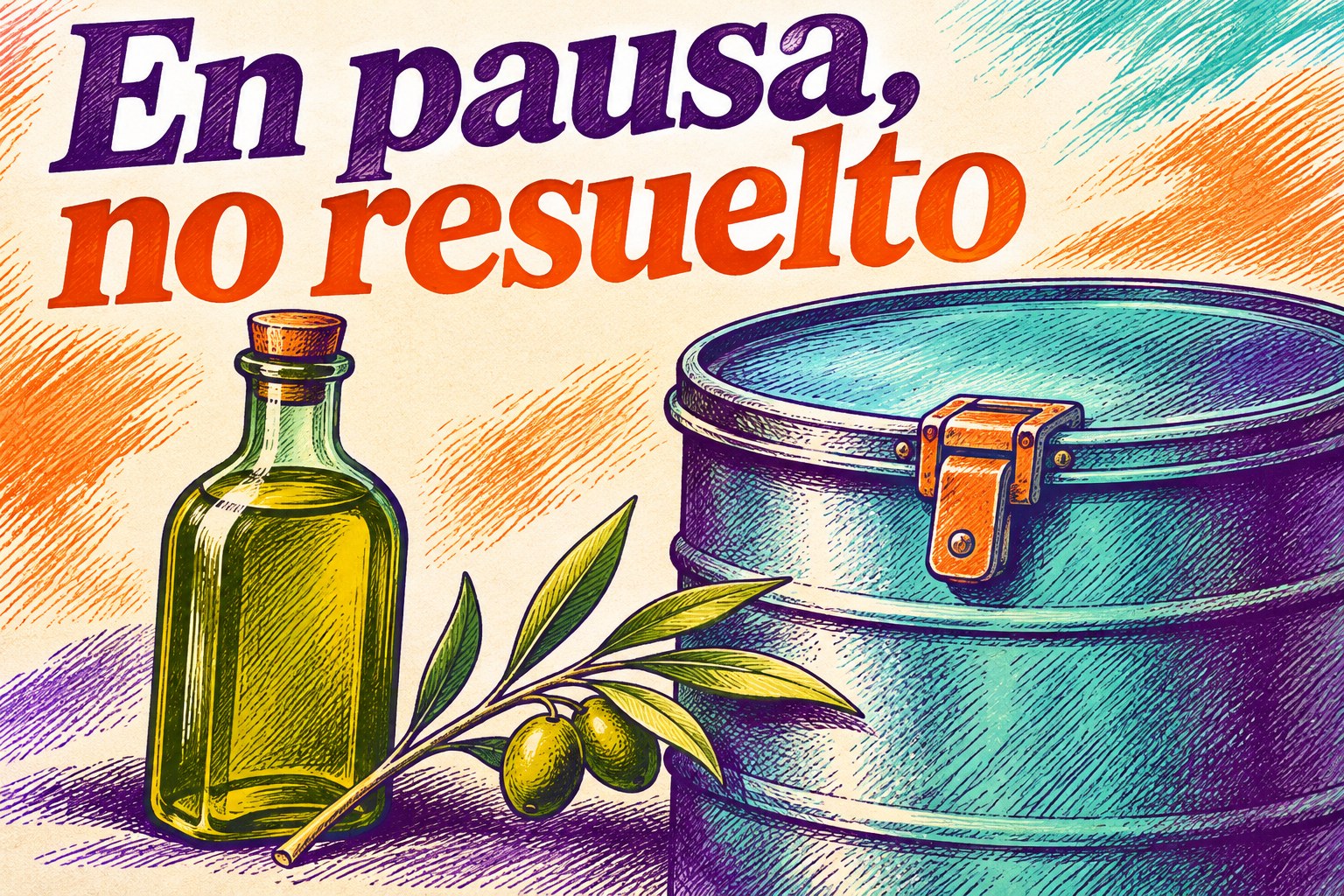
Spain has ordered compulsory storage of 12% of olive-oil production declared monthly by mills, its first use of this withdrawal mechanism. The order is a supply-management response to high stocks and a larger projected harvest, not evidence of what consumers will pay.
The Agriculture Ministry’s order was published in Spain’s Official State Gazette on Friday. elDiario.es reports that it begins with production declared in November, temporarily removes about 188,000 tonnes from the market, and keeps those volumes withdrawn until 30 September 2027.
The ministry says the measure is intended to prevent market distortions and ensure stability. Its reported basis is high opening stock for the 2026/27 campaign and an official forecast of 1,602,596 tonnes, 23% above the preceding season. elDiario.es also reports opening stocks of 357,040 tonnes, 23.3% higher than a year earlier. Forecast output plus carry-over stocks reportedly met the technical trigger: 120% of average production in the previous six campaigns.
The policy therefore signals that the government sees excess supply as a market-stability risk. Mills may choose the category of olive oil placed into storage. The ministry is also to coordinate a technical monitoring group, while regional authorities carry out controls.
There is a defensible case for temporarily withholding supply when stocks and expected output are high. But the available reporting does not establish whether shop prices will rise, fall or remain stable, or who will absorb storage costs. It also contains no direct responses from growers, mills, retailers or consumer groups.
The unresolved question is implementation. The supplied material does not establish the full operating rules, exemptions or penalties. The resolution may be changed after 31 December 2026 depending on how production develops.
Sources
- elDiario.es · Source date: 2026-11-06
- El Mundo · Source date: 2026-11-06
Independent editorial content. WUA is not affiliated with any political party. 2026-11-06