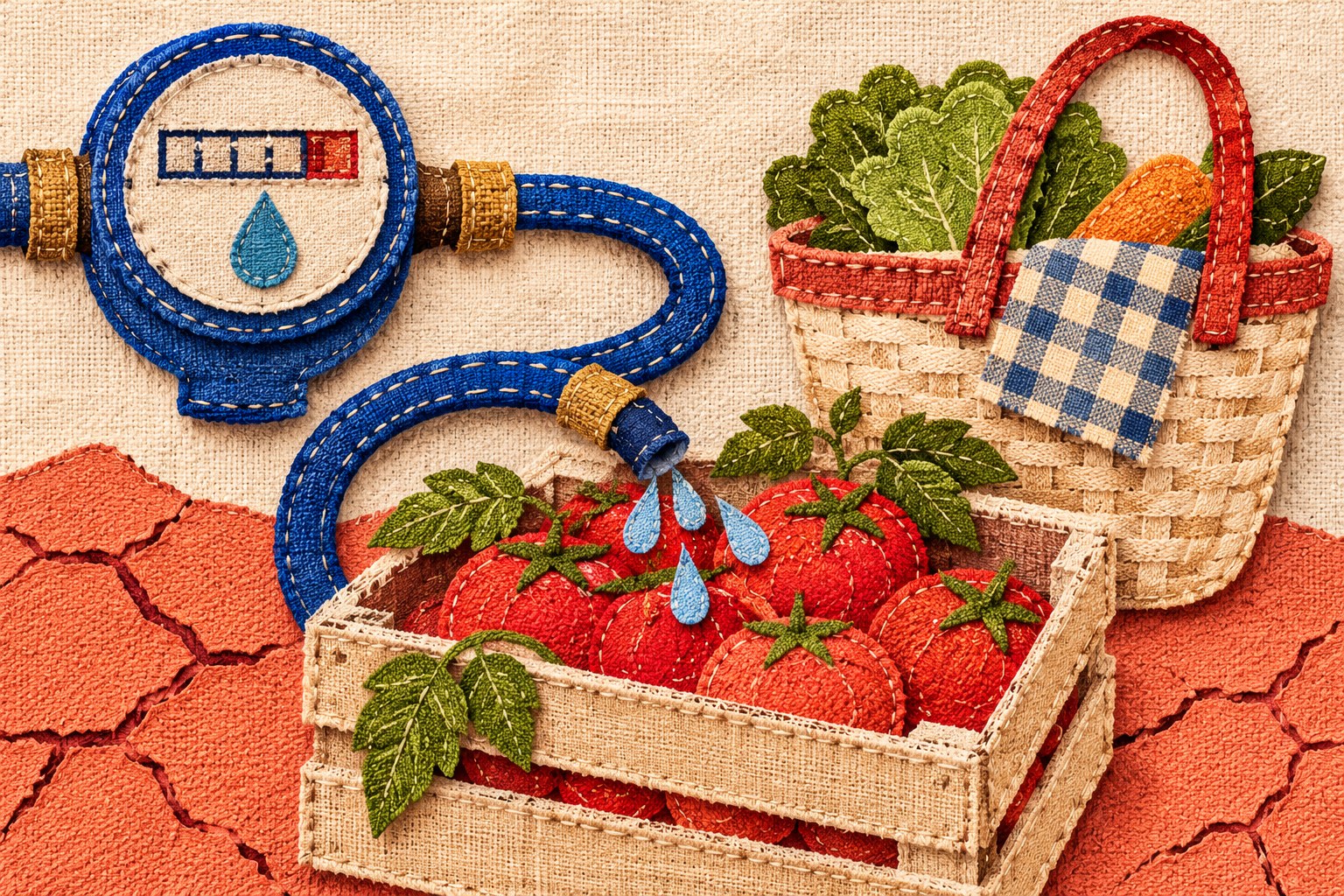
Oxfam’s report, published on 12 November, puts a specific risk behind grocery bills: the group says the climate crisis could account for one third of projected food inflation in the eurozone in 2027. That forecast does not set the future cost of a household food basket. But it points to a chain already visible in France, from climate shocks to farm costs and prices for some products.
Franceinfo reports that French vegetable-production costs rose by 14% in August, citing drought and higher water spending. It also reports increases for selected vegetables: vine tomatoes were three times the average price of the previous summer, while leeks and lettuce were 50% higher at the start of the autumn term than during 2021-2025.
Those examples cannot establish that every food price is rising in the same way. They do show why climate is no longer only a distant agricultural risk. When drought cuts yields or raises irrigation needs, production costs can move through the food supply chain. For households on the tightest budgets, Oxfam argues that each rise in food prices can force difficult choices.
The strongest reason not to overstate the case is also an important limitation: the available material does not include the full method, scenarios or uncertainty range behind Oxfam’s forecast. It should not be treated as a settled inflation rate. Yet waiting for certainty about every product would be a poor policy response to a transmission mechanism already reported in France.
Oxfam France calls for public policy and funding to be redirected toward securing farm incomes, small holdings and agroecological models. The practical issue is whether concrete measures can reduce production’s exposure to heat and drought, rather than pretending food prices are insulated from climate conditions.
Sources
- franceinfo Tous titres · Source date: 2026-11-12
Independent editorial content. WUA is not affiliated with any political party. 2026-11-12