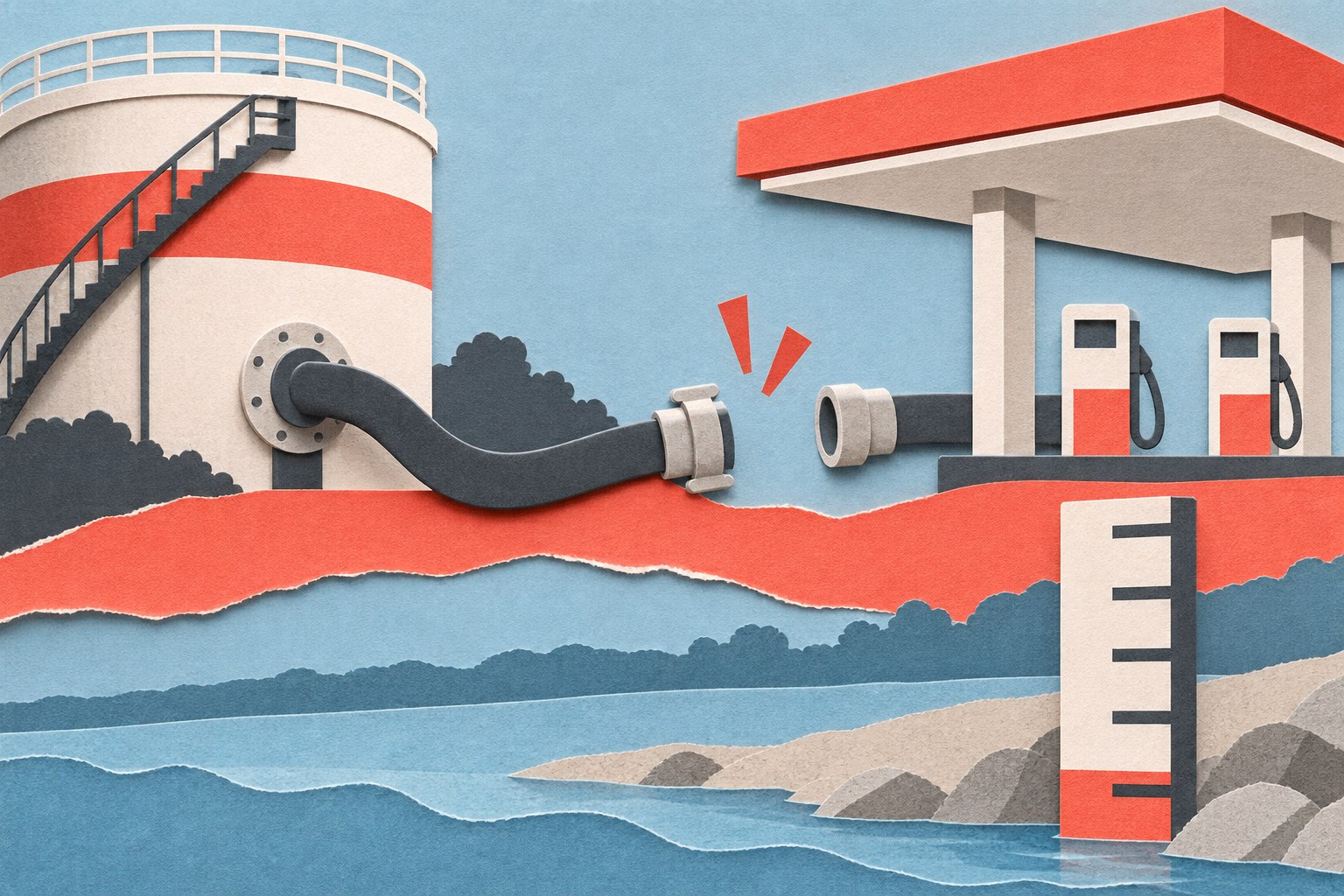
Lower pump prices do not necessarily mean fuel is reaching stations normally. That is the tension reported in France’s Grand Est on 11 November: Dominique Schelcher, chief executive of Coopérative U, said low water on the Rhine was disrupting normal petroleum-product resupply while sales had accelerated since the government released strategic diesel stocks on 2 November.
Schelcher wrote on X that supply was tightening across the north-east, that several fuel depots were out of stock, and that some stations could face short disruptions. His warning points to a regional logistics strain, not a nationwide fuel shortage.
A regional indicator supports the concern. According to government data cited by franceinfo, 19% of Grand Est service stations had a distribution disruption affecting at least one fuel at 9am. That does not mean those sites had run out of every fuel type; it records a disruption involving at least one product.
The reported bottleneck is physical. Some fuel used in eastern France comes from refineries in northern Europe and travels via the Rhine. When low river levels prevent normal resupply, cheaper diesel at the forecourt cannot by itself restore a constrained transport route.
The strategic-stock release may have helped bring prices down and, according to Coopérative U’s account, increase sales. But the episode exposes the limit of a price-focused response: releasing volume does not instantly remove a regional transport constraint. The available reports do not specify the fuel types involved at each station, the exact number of affected sites, or how long disruptions may last.
Sources
- franceinfo Tous titres · Source date: 2026-11-11
- Le Figaro Actualités · Source date: 2026-11-11
Independent editorial content. WUA is not affiliated with any political party. 2026-11-11