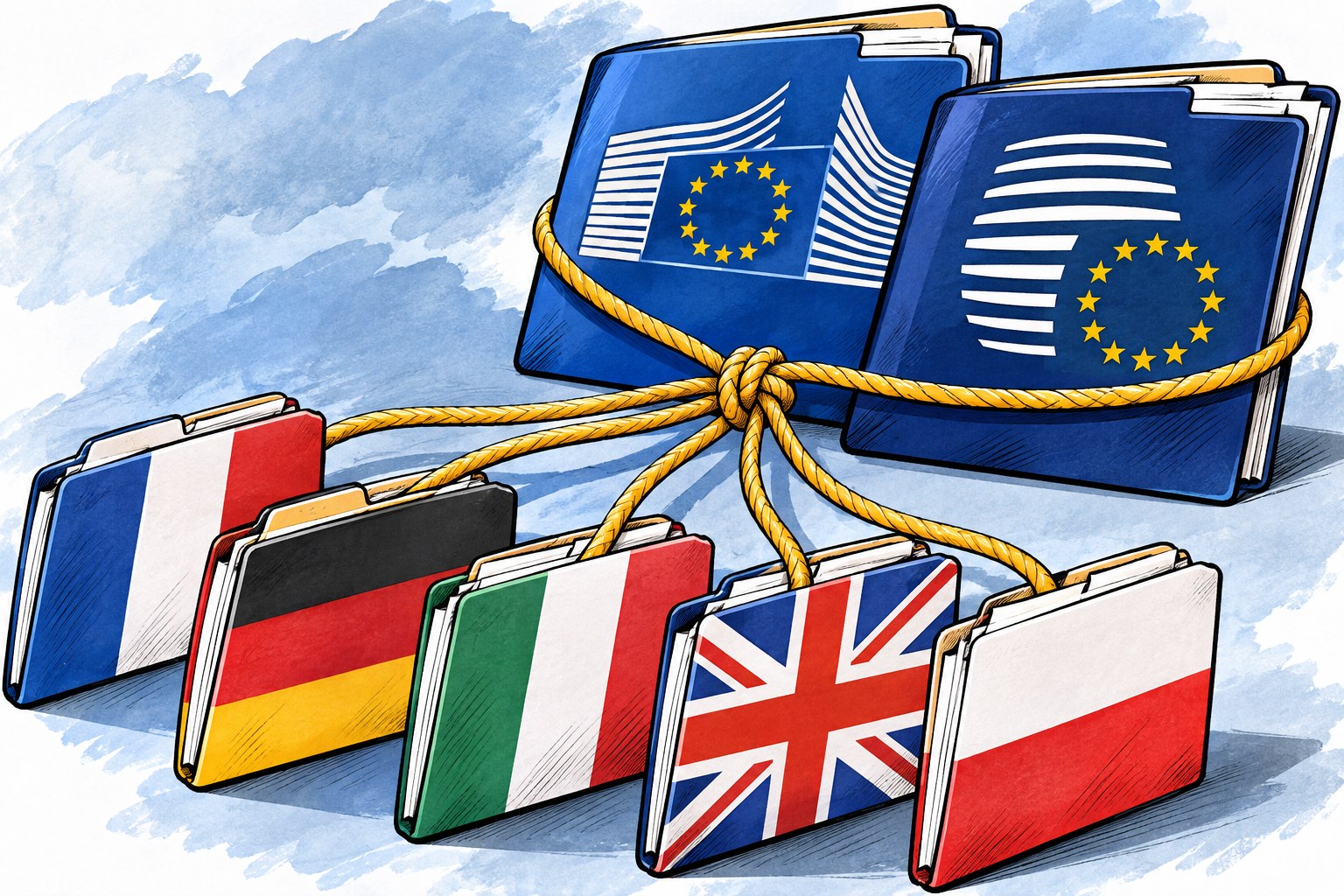
EU leaders meeting in Dublin have given a concrete answer to the previously unresolved question of who would represent Europe in future talks on ending the war in Ukraine. According to European Council President António Costa, a European negotiating team will bring together EU institutions and the E5: Germany, the United Kingdom, France, Italy and Poland. Germany therefore has a defined place in a joint European structure rather than simply asserting a separate role.
The decision matters because the argument had centred on representation. Some smaller member states and EU institutions had backed representation by senior EU figures, while countries including Germany and Italy wanted to send their own negotiators. The formula reported by Der Spiegel joins those approaches. Commission President Ursula von der Leyen said the EU institutions in the arrangement are the European Commission and the Council of EU countries. The United Kingdom is included through the E5 despite not being an EU member.
That is a meaningful move beyond a general demand for Europe to be present. A team can bring national interests and EU responsibilities into one arrangement. Costa said it would work in close coordination and unity while protecting European interests.
Yet the Dublin agreement does not answer every operational question. The report does not identify the individuals who would negotiate, the team’s shared decision-making rules, or a formal mandate. It also gives no date, venue or agenda for a next round of talks, and does not report formal acceptance of the team by Russia or Ukraine.
The agreement is therefore more than symbolism, but not a completed negotiating format. Europe has publicly organised its internal representation. Whether that structure becomes an effective voice will depend on the still-unpublished arrangements for authority, procedure and participation in the talks.
Sources
- Der Spiegel · Source date: 2026-11-13
Independent editorial content. WUA is not affiliated with any political party. 2026-11-13
Ukraine-Russia talks: Europe’s seat at the table does not settle its mandate