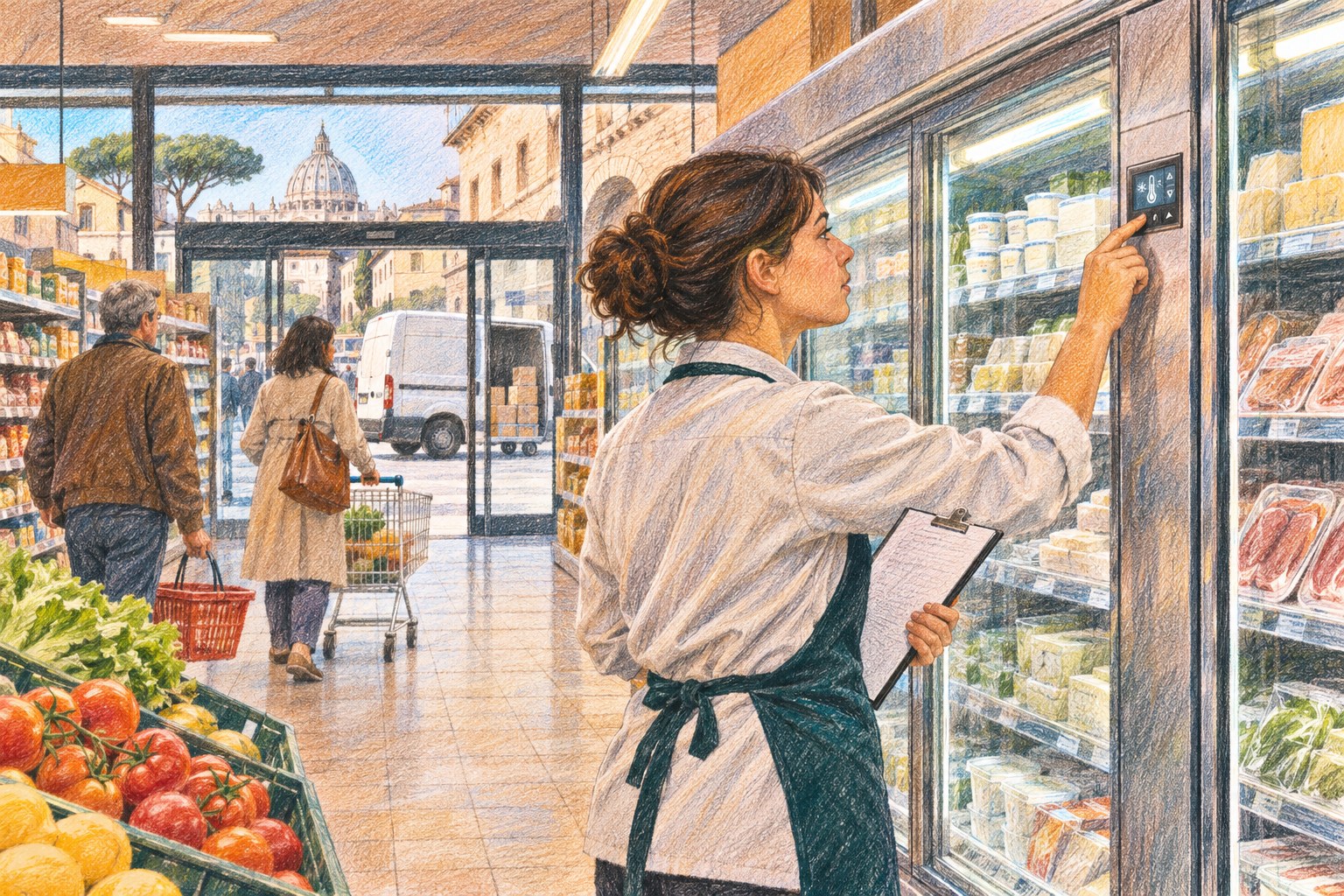
Italy’s supermarket cyberattacks should not be judged by the number of institutions now involved. After reported intrusions into refrigeration systems, the meaningful test is whether authorities and retailers disclose which systems and stores were affected, how potentially affected food was handled, and what the actual effects were on shop operations and deliveries.
On 2 November, ANSA reported that postal police were reconstructing the origin and scale of breaches affecting refrigeration systems at Sicilian supermarkets. La Repubblica Palermo reported affected outlets in Palermo, Catania and Ragusa and said more than ten supermarkets were involved. In separate reporting, ANSA said the national cyber agency had received an incident notification from a Tuscan company and detected an attack on an Emilia-based business.
The institutional development matters, but it is not proof of control. A meeting at Palazzo Chigi involving Alfredo Mantovano, intelligence services and the head of the National Cybersecurity Agency was announced for 3 November. ANSA also reported that Copasir would seek information from the government and hear from the heads of AISI and the cyber agency. Those steps can make the response accountable only if they yield defined evidence rather than a louder warning.
Four disclosures would be especially useful: the affected sites and systems; the checks and decisions concerning food exposed to abnormal temperatures; documented effects on sales, store opening and logistics; and technical protections already put in place. Some operational detail may properly remain restricted, but authorities should still define the scope of what is known and explain who is responsible for each assessment.
The strongest caution is equally important. Palazzo Chigi’s involvement and Copasir scrutiny do not establish a food shortage or a nationwide supply-chain stoppage. The supplied reports do not identify the attackers or document product recalls, delivery interruptions or shortages. That is exactly why transparent reporting is needed: it prevents a cold-chain risk from being dismissed, while also preventing an unproven crisis from being presented as fact.
The next point to watch is the announced Palazzo Chigi meeting. Its value will depend on whether the response to the supermarket cyberattacks produces checkable information on food safety and operational continuity, rather than only institutional statements.
Sources
- ANSA · Top news · Source date: 2026-11-02
- la Repubblica · Source date: 2026-11-02
- ANSA · Top news · Source date: 2026-11-02
- ANSA · Top news · Source date: 2026-11-02
- ANSA · Top news · Source date: 2026-11-02
Independent editorial content. WUA is not affiliated with any political party. 2026-11-03
Italy supermarket cyberattacks: Why refrigeration systems are a food-supply resilience test