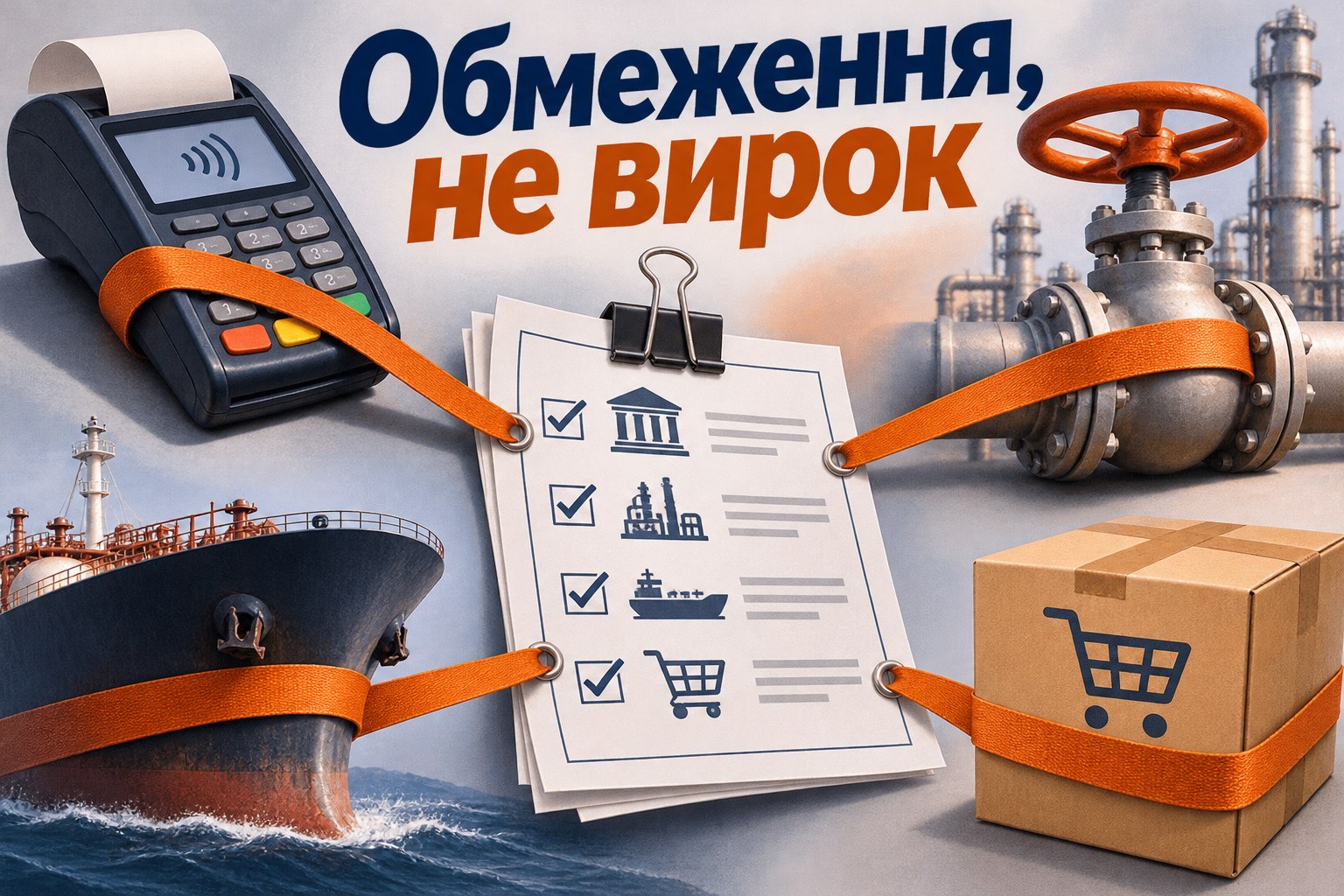
On 16 November, the EU Council placed 49 Russian banks and financial institutions in the same sanctions decision as energy companies, shadow-fleet-linked firms and online platforms. The immediate change is legal, not a measured economic outcome: the decision expands the parties subject to EU asset freezes and a ban on receiving funds or economic resources from EU persons.
According to European Pravda, citing the EU Council and Council Decision 2026/2574, the Council approved restrictions on 12 individuals and 101 entities from Russia and third countries. Assets of all 113 listed parties in the EU are frozen, and EU citizens and companies are prohibited from making funds or other economic resources available to them, directly or indirectly. The 12 individuals are also barred from entering the EU.
The combined listing brings together different nodes that the EU links to Russian state revenues, war financing or sanctions evasion. It covers 47 commercial banks and two non-bank credit organisations, 27 oil-refining, extraction and gas companies, and 15 companies that own, manage, finance or insure shadow-fleet tankers. The report says the EU regulation describes Wildberries and Ozon as supply networks for military and dual-use goods for the Russian army.
The EU Council said stronger and broader banking-sector measures close financial channels through which state revenues flow and military action is financed. That is the rationale for placing finance, energy, maritime logistics and platforms in a single action: the restrictions bar EU-based actors from supporting specified parts of those networks with money or economic resources.
The strongest case for this approach is its wider coverage of linked sectors. But the listing does not disclose the value of assets that may be frozen in the EU, nor does it establish the speed or scale of any effect on Russian revenue or war financing. The decision should therefore be read as a broader legal pressure tool, not as evidence of an already measured financial result.
Sources
- Українська правда · Source date: 2026-11-16
Independent editorial content. WUA is not affiliated with any political party. 2026-11-16
EU sanctions of 16 November: 49 Russian financial institutions join shadow-fleet targets